Blog
Breaking into the modeling industry can feel like navigating a labyrinth without a map. The fashion world operates across continents with varying standards, the barrier to entry seems simultaneously low and impossibly high, and distinguishing legitimate opportunities from exploitative schemes requires knowledge most beginners simply don’t have. Yet beneath the surface glamour lies a structured professional industry with clear pathways, specific requirements, and diverse opportunities that extend far beyond the runway.
This comprehensive resource demystifies the modeling profession by examining the critical components every aspiring model should understand: the distinct requirements of major fashion markets, the legal and financial realities of working internationally, the concrete first steps that separate professionals from hobbyists, and the specialized niches that have transformed modeling into a multifaceted career landscape. Whether you’re considering your first agency submission or trying to understand which market aligns with your unique attributes, these foundational insights will help you make informed decisions from the very beginning.
Understanding the Global Modeling Landscape
The modeling industry isn’t a monolithic entity but rather a collection of distinct regional markets, each with its own aesthetic preferences, booking practices, and career trajectories. Understanding these differences is essential before investing time and resources into any particular market.
Physical Requirements Across Major Fashion Markets
Fashion capitals maintain surprisingly specific physical parameters that directly impact your marketability. New York typically favors editorial diversity with height requirements around 5’9″ to 6’0″ for women and 5’11” to 6’2″ for men, but shows increasing flexibility for commercial work. Paris and Milan tend toward more stringent measurements, often preferring slimmer proportions and a more angular aesthetic, particularly for high-fashion runway work.
London offers a slightly more experimental approach, frequently embracing unconventional looks and diverse body types, while Asian markets like Tokyo and Seoul often prefer smaller frames and different facial feature proportions than Western markets. These aren’t arbitrary preferences but reflect each market’s dominant client base, cultural beauty standards, and the type of fashion work most prevalent in that region.
Understanding where your natural attributes align with market preferences can save you from frustrating rejection cycles and help you strategically target markets where you’re most likely to find consistent work. A model who faces constant rejection in Milan for being “too commercial” might thrive immediately in New York’s advertising scene.
Timing Your Entry: Fashion Weeks and Seasonal Opportunities
The fashion industry operates on a predictable seasonal calendar that creates distinct windows of opportunity. Fashion weeks occur biannually in major markets—typically February/March for Fall/Winter collections and September/October for Spring/Summer shows. Agencies intensify scouting and model development approximately three to six months before these events, creating optimal entry windows.
However, arriving in a new market during fashion week itself as an unknown model is often counterproductive. Agencies are focused on servicing established roster models during these intense periods, leaving little bandwidth for new talent development. Instead, consider arriving during “building seasons”—the months when agencies actively develop new faces and build portfolios without the pressure of immediate bookings.
Seasonal considerations also affect the type of work available. Catalogue and e-commerce shoots often ramp up before major retail seasons, while editorial work follows fashion week cycles. Understanding these rhythms helps you plan financially for slower periods and maximize your availability during peak booking times.
Navigating the Legal and Financial Realities
The international nature of modeling creates complex legal and financial considerations that many beginners overlook until they encounter problems. Proactive understanding of these practicalities distinguishes sustainable careers from short-lived attempts.
Work Permits and Visa Considerations
Working legally in foreign markets requires proper authorization, and immigration violations can result in deportation and future travel restrictions. Most fashion markets require work permits or specific visa categories for models, and the application process often demands agency sponsorship, proof of established career credentials, or demonstration of specialized skills.
The United States uses O-1 and P-1 visa categories for models demonstrating extraordinary ability or internationally recognized achievements. European markets vary significantly—some allow limited work on tourist visas for editorial shoots while strictly prohibiting paid commercial work, while others require comprehensive work permits from day one. Asian markets typically mandate formal work permits with agency sponsorship.
Many models inadvertently work illegally by accepting paid jobs on tourist visas, believing the practice is industry-standard. While enforcement varies, the consequences can be severe and permanent. Reputable agencies handle visa logistics as part of their representation, and any agency suggesting you work illegally should be immediately avoided regardless of the opportunities they promise.
Budgeting for High-Cost Fashion Cities
Fashion capitals are almost universally expensive cities, and the financial reality of model apartments, transportation, portfolio development, and daily living costs surprises many newcomers. New York and London typically require $1,500-2,500 monthly for basic model apartment accommodation alone, before food, transportation, and professional expenses.
Most agencies advance these costs against future earnings, creating a debt that must be repaid before you see income. A model might work for months while their account remains negative, receiving only small weekly allowances for basic expenses. This system isn’t inherently exploitative—it allows newcomers to enter expensive markets without upfront capital—but it requires understanding that initial work builds your portfolio and reputation rather than your bank account.
Successful models typically arrive with savings to cover at least three to six months of basic expenses, reducing desperation-driven decision-making and providing a financial cushion during the unavoidable slow periods. This financial preparation often determines who persists through the challenging early phase versus who returns home prematurely.
Taking Your First Professional Steps
The transition from aspiring model to represented professional requires specific, concrete actions that demonstrate your seriousness and professionalism to potential agencies.
Industry-Standard Measurements and Polaroids
Before contacting agencies, you need accurate, honest measurements and simple, unretouched photographs called polaroids or digitals. Measurements must include height, bust, waist, hips, shoe size, and often dress/suit size, taken precisely according to industry standards—over the fullest part of the bust, at the natural waistline, around the fullest part of the hips.
Inflating measurements to meet requirements backfires immediately when you arrive at castings or jobs and don’t fit the clothing. Agencies need accurate information to determine if you match client requests, and dishonesty destroys trust before your career begins.
Polaroids should show you in minimal makeup, hair pulled back, wearing simple fitted clothing that reveals your natural physique. Agencies need to see your unadorned features, body proportions, and skin quality—not your photography skills or styling ability. Standard polaroid sets include:
- Head shot (face forward, neutral expression)
- Full-body shot (facing camera, arms relaxed at sides)
- Profile shot (side view, full body)
- Three-quarter view (showing body proportions from an angle)
These simple images allow agencies to assess your potential and determine if you match the types they represent, making them more valuable at this stage than expensive professional photography.
Identifying Legitimate Agencies and Avoiding Scams
The modeling industry’s low barrier to entry attracts predatory operations that profit from aspiration rather than actual model placement. Legitimate agencies earn money by taking commission (typically 10-20%) from jobs they book for you—their success depends on your success. They never charge upfront fees for representation, portfolio production, or “registration.”
Warning signs of scam operations include:
- Immediate acceptance of everyone who applies without selective evaluation
- Mandatory expensive photography packages or classes as a condition of representation
- Requests for payment for portfolio inclusion, website features, or “marketing”
- Guarantees of work or income (legitimate agencies can never guarantee bookings)
- Pressure tactics emphasizing urgency or limited-time opportunities
Research potential agencies by examining their current roster (are these working models with verifiable credits?), checking industry databases and reputation forums, and verifying their legitimacy with local modeling unions or professional associations. Reputable agencies are selective, transparent about how they earn income, and willing to answer questions without pressure.
Handling Rejection and Staying Motivated
Rejection is mathematically inevitable in modeling—most castings have dozens to hundreds of hopefuls competing for one or two spots, meaning even successful models hear “no” far more often than “yes.” Understanding this reality intellectually helps, but the emotional impact of repeated rejection still challenges even the most resilient individuals.
Constructive rejection management begins with depersonalizing outcomes. You weren’t rejected because you’re inadequate—you weren’t selected because someone else better matched that specific client’s vision for that particular project at that moment. The model booked might have been shorter, taller, had different coloring, or simply reminded the client of their target demographic. None of these factors reflect your worth or potential.
Successful models develop rejection resilience by maintaining perspective, celebrating small wins (being called back even without booking, positive feedback from agents, incremental portfolio improvements), and understanding that every casting is both an opportunity and a learning experience. The ability to attend a disappointing casting and immediately move forward with genuine enthusiasm to the next one separates those who build careers from those who burn out.
Finding Your Niche in the Modeling World
The fashion industry encompasses far more diversity than runway shows and magazine covers. Understanding specialized modeling niches dramatically expands your opportunities and allows you to build a sustainable career even if you don’t fit traditional high-fashion parameters.
Classic and Mature Modeling
The classic or mature modeling market serves clients targeting consumers over forty, representing everything from retirement planning services to pharmaceutical advertising to lifestyle brands. This sector has expanded significantly as the population ages and marketers recognize the purchasing power of older demographics.
Classic models typically begin or transition into this market after age forty, though some niches prefer fifties and beyond. Unlike youth-focused fashion modeling where careers often peak in the early twenties, classic modeling can span decades. Requirements focus less on traditional height and measurement standards and more on maintaining healthy appearance, expressive features, and the ability to authentically represent active, engaged maturity rather than stereotypical “elderly” casting.
Fit Modeling: Behind-the-Scenes Opportunities
Fit modeling represents one of the industry’s best-kept secrets for sustainable income. Fit models work directly with design teams during garment development, trying on samples to assess how clothing fits, moves, and flatters the target size demographic. Rather than being exceptionally tall or thin, fit models must precisely match standard sizing specifications—a much broader pool of potential candidates.
This work occurs year-round in fashion production centers, offers consistent hourly rates (often higher than many editorial day rates), and follows regular business hours rather than the unpredictable scheduling of traditional modeling. Many fit models maintain careers spanning decades, often while simultaneously pursuing other modeling sectors or careers entirely outside the industry.
Requirements are extraordinarily specific: you must match exact measurements for a particular size (often size 8 in women’s ready-to-wear, medium in contemporary lines, or specific sizing in men’s wear) and maintain those measurements consistently. Fit models typically work with the same brands repeatedly, making reliability and measurement stability more valuable than constantly changing your appearance.
Parts Modeling and Specialized Work
Parts modeling focuses on specific body parts rather than overall appearance—hands, feet, legs, hair, or even specific facial features like eyes or lips. This highly specialized sector serves beauty advertising, product photography, and close-up commercial work where only a particular body part appears on camera.
Requirements are extraordinarily specific to each specialty. Hand models maintain impeccable skin, nail health, and proportionate fingers, often avoiding activities that risk injury or callusing. Foot models similarly maintain pristine skin and nail quality while meeting specific size and proportion requirements. Hair models possess exceptional hair health, often in specific colors or textures currently in demand.
Parts modeling can be exceptionally lucrative when you possess the specific attributes clients need, and it offers longevity that full-body modeling rarely provides—your hands don’t age out of demand the same way runway models might. However, maintaining the required perfection demands significant lifestyle adjustments and constant care.
Curve, Plus-Size, and Athletic Modeling
The terminology around fuller-figure modeling reflects ongoing industry evolution, and understanding distinctions helps you position yourself correctly. “Plus-size” modeling traditionally referred to sizes 12-16 and above, while “curve” modeling emerged to describe sizes 8-12, reflecting more athletic or voluptuous proportions without necessarily larger sizing.
This sector has exploded as brands recognize that the majority of consumers don’t fit traditional sample sizing and demand authentic representation. Major agencies now maintain dedicated curve divisions, and some agencies specialize exclusively in this market. Requirements typically include height standards similar to traditional modeling (5’8″ and above for women) but with different measurement parameters.
Athletic and fitness modeling targets the activewear, sports nutrition, and wellness markets, requiring visible muscle definition and athletic build rather than traditional model slenderness. This niche values authentic athleticism—many fitness models are actual athletes, personal trainers, or fitness competitors who model alongside their primary careers.
Each of these niches offers distinct advantages: curve modeling is experiencing tremendous growth and demand, plus-size modeling provides opportunities for individuals who would never fit traditional parameters, and fitness modeling allows you to maintain a healthy, strong physique rather than striving for extreme thinness. Understanding where you naturally fit, rather than trying to force yourself into traditional categories, often determines career satisfaction and success.
The modeling industry rewards those who approach it with both ambition and realism—understanding that it’s a competitive professional field requiring specific attributes, but also recognizing that the field is far more diverse and accessible than popular perception suggests. By thoroughly researching markets that align with your natural attributes, preparing professionally with accurate information and materials, protecting yourself legally and financially, and exploring the full range of specialized niches available, you position yourself for sustainable success rather than brief, discouraging attempts. The models who build lasting careers aren’t necessarily the most conventionally beautiful, but rather those who combine suitable attributes with professional preparation, strategic market selection, and genuine resilience.
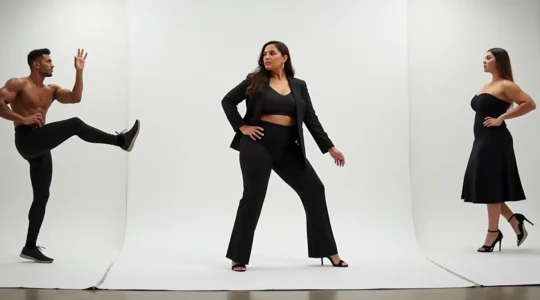
Fitness, Plus-Size, or Parts: Which Modeling Niche Maximizes Your Income Potential?
Contrary to popular belief, maximizing your modeling income has less to do with fitting a narrow beauty standard and more to do with strategically targeting the niche with the best business mechanics for your unique physical assets. High-demand niches like…
Read more
The First 6 Months: A Roadmap for Aspiring Models With No Connections
In summary: Stop worrying about professional photos; agencies want to see your raw potential via simple, self-taken digitals. Focus on finding a smaller, boutique agency that will act as a true “development partner” rather than just a booking agent. Treat…
Read more
Paris vs. New York vs. Asia: Which Market Suits Your Look Best?
Success in modeling isn’t about having a universal “it” look; it’s about achieving a precise Aesthetic-Market Fit. Paris demands avant-garde artistry for its high-fashion ecosystem, while New York prioritizes commercial viability and high-volume work. Choosing a market is a business…
Read more