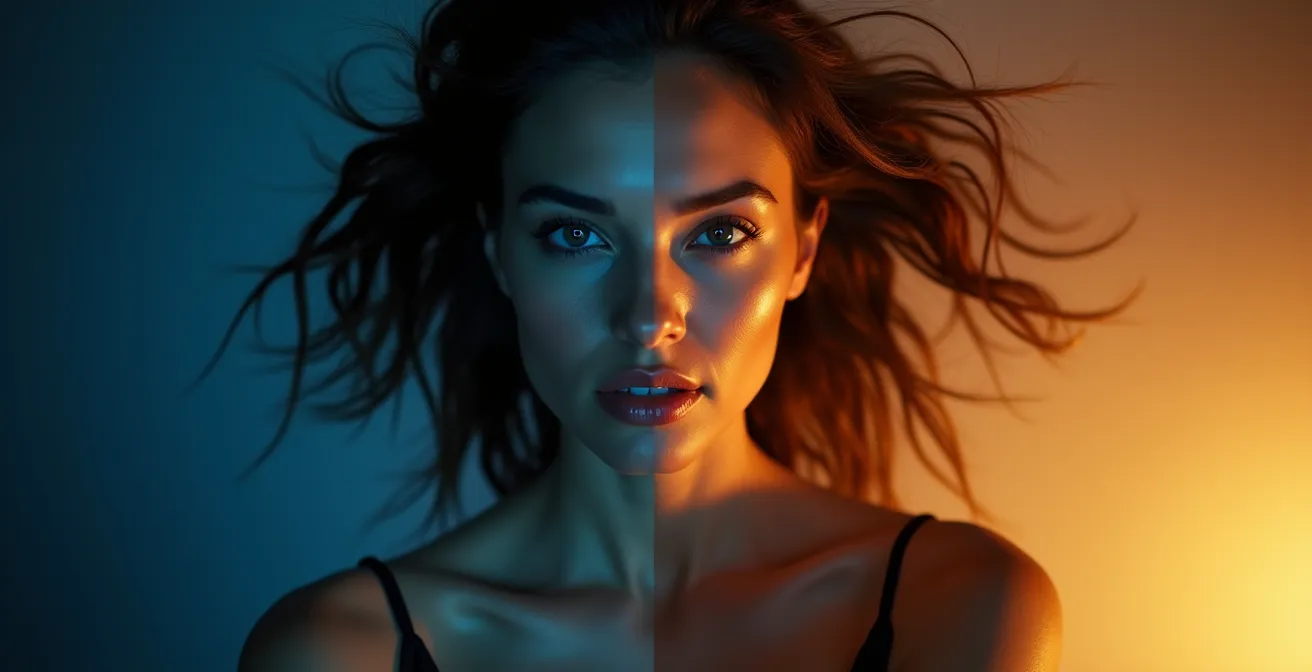
In summary:
- Mastering your energy is not about different poses, but about embodying the brand’s core story.
- Differentiate your approach: Editorial demands raw, disruptive energy, while commercial requires aspirational poise.
- Use micro-adjustments in your gaze, jaw, and hands to transform your entire presence.
- Conserve and reboot your energy strategically during long shoots to deliver peak performance for every look.
- True versatility comes from translating abstract concepts like “luxury” or “nostalgia” into specific physical expressions.
You know the feeling. The photographer calls “next look,” but your energy has flatlined. You’re cycling through the same three poses, your smile feels glued on, and your eyes look vacant. Every model has been there. The common advice is to “practice in the mirror” or “just feel the vibe,” but this rarely works when you’re six hours into a shoot and the client’s brief is a single, vague word like “aspirational.” The difference between a good model and a great, consistently booked model lies in a skill that is rarely taught: the art of the energy switch.
The real secret isn’t about having a bigger arsenal of poses. It’s about becoming an energetic chameleon. It’s the ability to consciously calibrate your internal state and translate it into precise physical expressions that tell a specific story. This goes far beyond just smiling for a catalog or looking serious for high fashion. It’s about understanding the deep narrative of the brand—who are you, what are you feeling, and who are you speaking to? Are you embodying the rebellious spirit of a Gen Z streetwear brand or the timeless elegance of a luxury heritage house?
This guide will deconstruct the techniques the pros use to modulate their energy on command. We will move from managing physical fatigue and mastering subtle facial expressions to the high-level skill of embodying abstract concepts. By the end, you will have a clear framework for analyzing any brief and delivering the exact energy required, making you an indispensable asset on any set.
This article breaks down the essential skills needed to become a master of on-set energy. Below, the table of contents will guide you through each critical component, from tactical energy reboots to the strategic embodiment of a brand’s core message.
Summary: Mastering the Art of On-Set Energy for Fashion Models
- The 2 PM Slump: How to Reboot Your Energy for the Final Looks?
- Jaw Tension: How to Look Fierce Without Looking Angry?
- The “Flow”: How to Move Continuously Without Blurring the Shot?
- Who Are You Selling To: The Edginess of Gen Z or the Luxury of Boomers?
- How to Look Elegant While Wearing a Winter Coat in 30-Degree Heat?
- How to Maintain High Energy Levels During a 12-Hour Catalog Shoot?
- How to Fake Chemistry With a “Family” of Strangers for a Catalog Shoot?
- How to Embody Abstract Concepts Like “Future” or “Nostalgia” in Posing?
The 2 PM Slump: How to Reboot Your Energy for the Final Looks?
It’s the most dangerous time on any long shoot. Lunch has worn off, the initial adrenaline is gone, and the final, often most important, looks are still waiting. This is where amateurs fade and professionals shine. A droop in energy is immediately visible on camera—it’s in the eyes, the posture, the slightest hesitation. Rebooting your energy isn’t about forcing a smile; it’s a technical process of resetting your mind and body. The goal is to interrupt the fatigue pattern before it takes hold.
One of the most effective methods is using sensory anchoring. This technique involves linking a high-energy state to a specific, unique stimulus. For instance, you can train your brain to associate the sharp scent of peppermint oil or the opening chords of a specific “power song” with a feeling of peak alertness. When you feel the slump coming, deploying your anchor can trigger an immediate physiological shift. It’s a mental shortcut that bypasses the feeling of being tired and directly accesses your performance state. This is far more effective than scrolling through your phone, which only drains your mental battery further.
Another pro technique is strategic pacing. You cannot maintain 100% “performance energy” for eight straight hours. Differentiate between the moments the camera is up and the moments it’s down. Between shots, during lighting adjustments, or while the stylist is making a change, shift into “recovery energy.” This means relaxing your muscles, taking deep, slow breaths, and mentally disengaging. As professional model Ruth Crilly advises, even something as simple as synchronizing your blinks with the camera flashes and making tiny, incremental movements for beauty shots helps conserve massive amounts of energy while maintaining the required precision.
By actively managing your energy cycles instead of letting them manage you, you ensure that your last shot of the day is as powerful and compelling as your first.
Jaw Tension: How to Look Fierce Without Looking Angry?
A “fierce” look is one of the most requested expressions in fashion, but it’s also one of the most misunderstood. Inexperienced models often translate “fierce” into “angry,” which manifests as a clenched jaw, furrowed brow, and a hard, unapproachable stare. This is a crucial mistake. Anger pushes the viewer away, while fierceness should be a magnetic look of confidence, power, and intent. The key to unlocking this expression lies in one place: the jaw.
The technique is about creating a contrast between intense eyes and a relaxed jaw. All the intensity should be focused in your eyes—the famous “smize” or squinting slightly as if you’re looking into the sun. This conveys focus and power. However, the rest of your face, particularly your mouth and jaw, must remain completely soft and neutral. A simple exercise is to part your lips ever so slightly, just enough to create a sliver of space between your top and bottom teeth. This simple action instantly releases all tension in the jaw and lower face, preventing the “angry” clench.
This micro-adjustment transforms the entire narrative of your expression. It changes the look from aggressive to poised, from hostile to high-fashion. You are communicating control and self-assurance, not rage. It’s the look of someone who knows their power, not someone who needs to prove it. Mastering this subtle separation between eye intensity and jaw relaxation is a game-changer that immediately elevates your look from amateur to editorial.
This image demonstrates the essential contrast: the eyes are sharp and focused, projecting confidence, while the jaw and mouth remain soft and parted, eliminating any hint of anger.
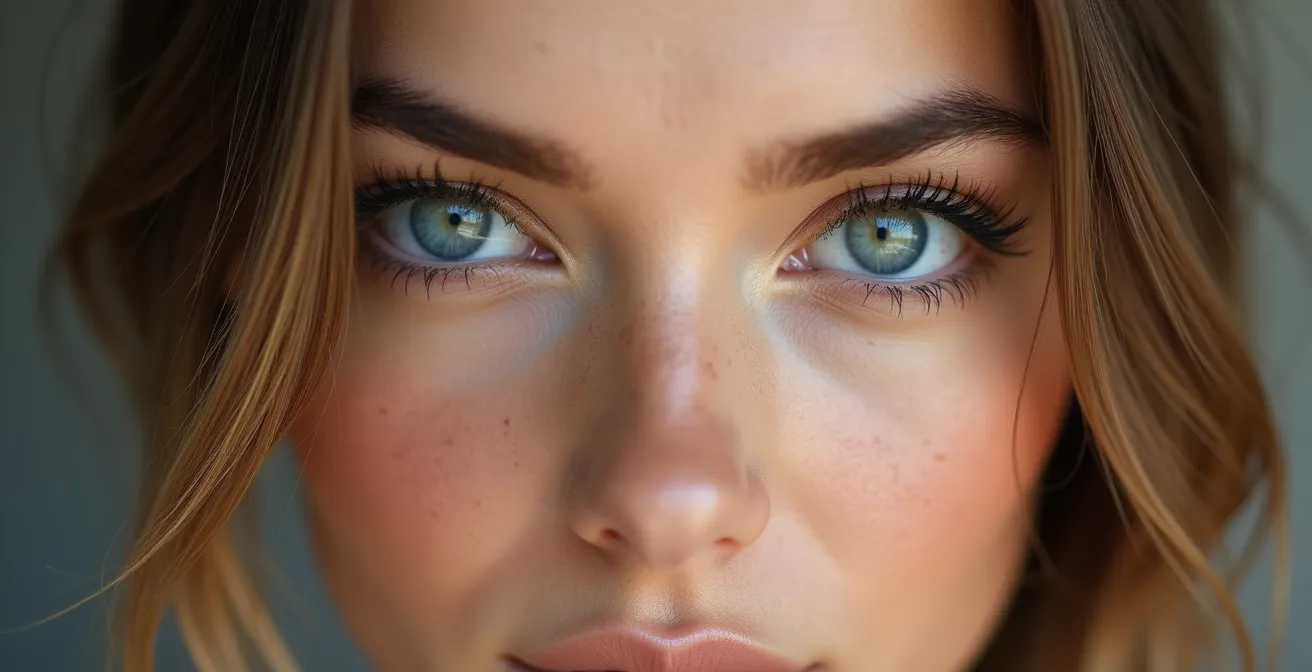
As you can see, the power is all in the gaze. The lack of tension in the lower half of the face creates a look that is both strong and sophisticated, drawing the viewer in rather than confronting them. This is the essence of a truly fierce, high-fashion expression.
Practice this in front of a camera, not just a mirror, and you’ll see a dramatic improvement in your ability to deliver powerful, captivating expressions on demand.
The “Flow”: How to Move Continuously Without Blurring the Shot?
Static poses are dead. Modern fashion photography, both editorial and commercial, craves movement and life. Clients want to see how a garment lives and breathes on a body in motion. This is where “the flow” comes in—the ability to move continuously, creating a series of micro-poses for the photographer to capture, without ever becoming a frantic, blurry mess. The goal is not to move quickly, but to move with purposeful fluidity, creating shapes and lines with your body as you transition from one point to another.
The secret to a successful flow is to find a rhythm and maintain a constant, controlled speed. Think of it less like dancing and more like a slow-motion walk or a tai chi sequence. The movement should originate from your core, allowing your limbs to follow naturally. A great starting point is simply walking toward the camera or pacing back and forth. This simple action, when done with intention, forces the fabric to move and creates dynamic, natural-looking compositions. It’s about finding a “story” for your movement—are you walking with determination, drifting nostalgically, or striding with confidence?
The key is to never fully stop. Instead of hitting a pose and freezing, you “pause” in a moment of peak tension or shape—an extended leg, a turned head, an outstretched arm—and then immediately but slowly transition into the next movement. This gives the photographer a constant stream of opportunities. High fashion often utilizes poses that are far from natural, such as standing with shoulders pushed forward to accentuate the movement of a gown in the wind. This deliberate, controlled motion is what creates those breathtaking shots where the garment feels alive.
Ultimately, mastering the flow transforms you from a static mannequin into a dynamic storyteller, providing the photographer with rich, authentic, and compelling images that sell not just a garment, but a feeling.
Who Are You Selling To: The Edginess of Gen Z or the Luxury of Boomers?
The most critical question you must answer before the first click of the shutter is: who is the customer? The energy required to sell a rebellious, deconstructed jacket to a Gen Z audience is the polar opposite of the energy needed to sell a timeless cashmere coat to a Boomer. Confusing the two is a fast track to a failed shoot. Your role as an energetic chameleon is to instantly decode the target demographic and embody their aspirations. This is the core of switching between editorial and commercial energy.
Editorial energy, often geared towards a younger, more fashion-forward audience (like Gen Z), thrives on disruption and authenticity. It’s about breaking the rules. Think broken lines, asymmetry, and angular poses. The gaze is often direct, even confrontational, challenging the viewer. The energy is raw, unfiltered, and prioritizes movement and emotion over perfection. You are not just wearing clothes; you are a character in a story, expressing a mood or a rebellious idea. Authenticity is the currency here.
Commercial energy, particularly for luxury brands targeting an older, more established demographic (like Boomers), is about aspiration and timelessness. The focus shifts to elongated lines, elegant posture, and quiet confidence. The body language is controlled and graceful, the gaze often indirect and knowing. It’s less about disrupting and more about inspiring. The mindset is one of heritage and poise. You are not a rebellious character; you are the embodiment of the success and sophistication the customer aspires to achieve. Here, perfection and polish are paramount.
The following table breaks down these two opposing energies. Understanding this distinction is the foundation of a versatile modeling career, as it is the key to elevating a brand’s image in the eyes of its specific consumer.
| Aspect | Editorial/Edgy (Gen Z) | Commercial/Luxury (Boomers) |
|---|---|---|
| Body Language | Broken lines, asymmetry, angular poses | Elongated lines, elegant posture, symmetry |
| Gaze Direction | Direct, confrontational, challenging | Indirect, knowing, sophisticated |
| Energy Level | High energy, movement, disruption | Quiet confidence, stillness, poise |
| Hand Positions | Dynamic, expressive, unconventional | Graceful, controlled, classic |
| Overall Mindset | Authenticity, rawness, rebellion | Heritage, aspiration, timelessness |
Internalizing this framework allows you to walk onto any set, immediately understand the assignment, and deliver the precise narrative the client needs to sell their product.
How to Look Elegant While Wearing a Winter Coat in 30-Degree Heat?
It’s one of the quintessential modeling challenges: shooting a winter campaign in the middle of July. The lights are hot, the air is thick, and you’re layered in wool, leather, or faux fur. The natural human reaction is to sweat, grimace, and look deeply uncomfortable. But the brief calls for “effortless winter elegance.” Your job is to defy reality. This is an extreme test of your ability to separate your internal physical state from your external emotional expression.
The first step is tactical heat management. This happens off-camera. Before your shot, pre-cool your body’s core. Use ice packs on your pulse points—the wrists and the back of the neck—for a few minutes. Drink ice water to lower your internal temperature. This buys you precious time in front of the camera before your body starts to overheat. During the shoot, use the garment as a prop rather than a prison. Instead of wearing the coat fully buttoned, drape it over one shoulder, hold it by the lapels, or let it hang open. This not only provides physical relief but also creates more dynamic and interesting styling.
The second, more powerful step is a mental one: the ‘Arctic Mind Palace’ technique. This is an act of intense visualization. While the photographer is setting up, close your eyes and mentally immerse yourself in a cold environment. Don’t just think “cold”; feel it. Visualize the crisp air on your skin, the crunch of snow under your feet, the sight of your breath in the air. By focusing all your mental energy on these sensations, you can trick your nervous system into momentarily ignoring the physical heat. Your expression will naturally shift from one of discomfort to one of serene composure, perfectly matching the winter narrative.
This image perfectly captures the technique. The model isn’t wearing the coat; she’s interacting with it. The garment is draped elegantly over her shoulder, creating a beautiful line while minimizing body heat.
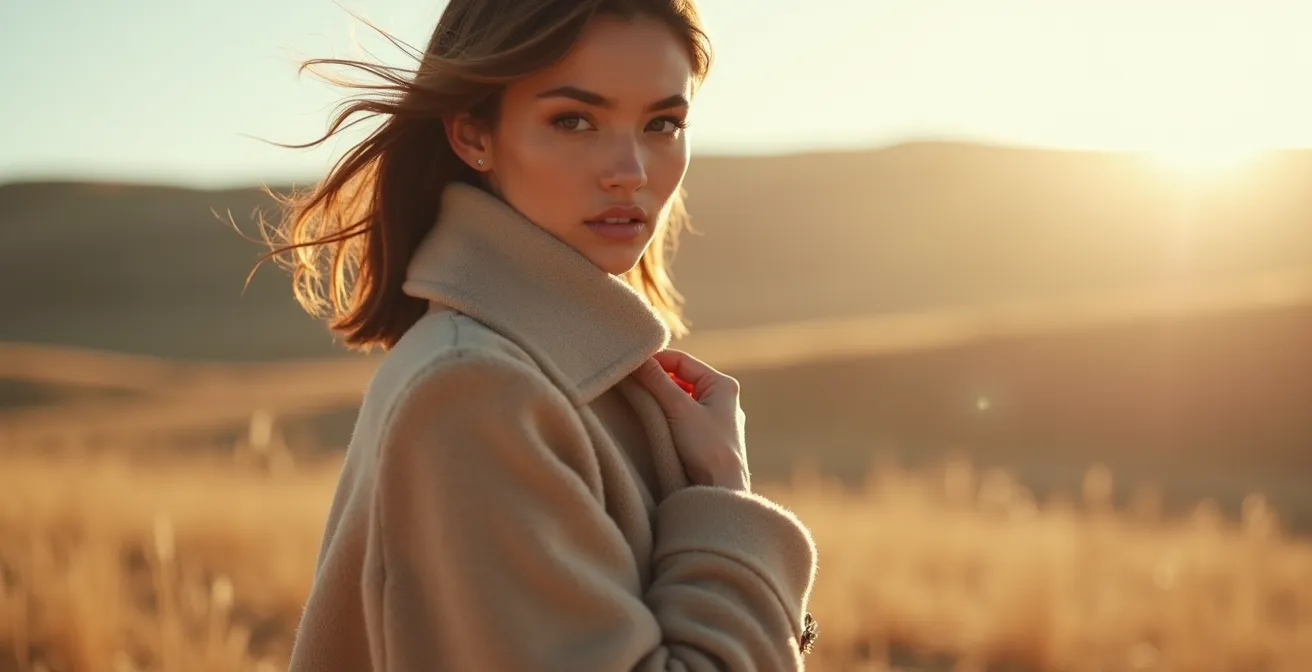
Notice the serene expression despite the bright, hot sun suggested by the lighting. This is the result of mastering both the physical styling trick and the internal mental state. It’s the difference between merely enduring the heat and using the challenge to create a more compelling image.
By combining practical heat mitigation with powerful mental visualization, you can deliver a convincing performance of winter elegance, even when you feel like you’re melting.
How to Maintain High Energy Levels During a 12-Hour Catalog Shoot?
A 12-hour catalog shoot is a marathon, not a sprint. The sheer volume of shots—often hundreds of them—can grind down even the most energetic model. Unlike an editorial shoot where you might spend hours crafting a single perfect image, catalog work is about consistency, efficiency, and maintaining a bright, approachable energy from the first shot to the last. Losing steam doesn’t just result in a bad photo; it slows down the entire production. The key isn’t to have boundless energy, but to practice meticulous energy budgeting.
Energy budgeting starts with nutrition and hydration. What you consume has a direct impact on your performance. Forget sugary drinks and simple carbs that lead to a crash. You need sustained energy. This means eating complex carbohydrates like oatmeal or whole grains about two hours before the shoot begins. Throughout the day, avoid heavy meals and instead snack on small portions of protein and healthy fats every 90 minutes. Things like nuts, beef jerky, or a protein bar will keep your blood sugar stable and prevent the dreaded energy slumps. Hydration is equally critical; add electrolytes to your water to replenish what you lose under the hot lights and prevent both muscular and mental fatigue.
The second part of energy budgeting is allocating your output. You don’t need to be “on” 100% of the time. Learn to differentiate between key shots and setup time. When the photographer is capturing the main product angles, deliver your full, high-expenditure energy. But during lighting tests, focus checks, or while the crew is resetting, switch to a “power-saving mode.” Relax your body, breathe deeply, and mentally conserve your resources. This isn’t about being lazy; it’s about being strategic. By managing your energy like a budget—with strategic spending and regular deposits—you ensure you have enough in the tank to deliver a fresh, engaging performance for all 12 hours.
Your Action Plan: The 12-Hour Shoot Energy Protocol
- Eat complex carbs 2 hours before the shoot for a sustained energy base.
- Take small protein/fat snacks every 90 minutes (e.g., nuts, jerky) to maintain stable blood sugar.
- Hydrate with electrolytes, not just water, to prevent muscular and mental fatigue.
- Allocate high-expenditure energy for key shots, and use a ‘power-saving mode’ for lighting tests.
- Implement a 5-minute reset routine every 90 minutes, such as guided meditation or box breathing, instead of phone scrolling.
Mastering this protocol ensures you end the day as strong as you started, solidifying your reputation as a reliable and professional talent.
How to Fake Chemistry With a “Family” of Strangers for a Catalog Shoot?
You’ve just met your “husband” and two “children” five minutes ago, and now the photographer is asking for a “warm, loving, candid family moment.” This is a classic catalog scenario, and one of the most awkward challenges a model can face. The camera exposes fake emotions instantly. A forced smile or a stiff hug looks staged and unconvincing, failing to create the aspirational connection the client needs to sell their product. The secret to faking chemistry is to stop trying to “act” and start trying to genuinely connect, even if it’s just for a few hours.
The fastest way to build rapport is to break the professional barrier immediately. Don’t wait for the photographer to direct you. In the moments before the shoot begins, take the initiative. Introduce yourself and ask simple, open-ended questions. As modeling coach Olivia Bossert suggests, asking “How long have you been modeling?” or “How did you get scouted?” are easy icebreakers. This isn’t small talk; it’s a professional technique. It shifts the dynamic from a group of strangers posing together to a group of colleagues working on a shared project. This small investment in human connection pays huge dividends on camera.
When it comes to physical interaction, the key is “purposeful touch.” Stiff, hesitant contact screams “fake.” Instead, make your touch points deliberate and natural. A hand on a “partner’s” shoulder should rest there with gentle weight. A hug with a “child” model should be real, not a tentative pat on the back. A powerful technique is to create a small, shared secret or an inside joke on set. A funny look exchanged between shots or a quiet, whispered comment can create a bubble of genuine connection that the camera will capture. It makes the smiles real and the interactions feel authentic, transforming a group of strangers into a believable family for that one perfect shot.
By leading with genuine curiosity and intentional physical connection, you can create the believable, heartwarming chemistry that makes a lifestyle catalog successful.
Key Takeaways
- True modeling versatility is not about having more poses, but about mastering the internal-to-external energy switch.
- Every brief has a target customer. Your primary job is to embody the aspirations of that specific customer, be it through edgy rebellion or quiet luxury.
- Energy is a finite resource on set. Budget it wisely through nutrition, hydration, and strategic “power-saving” modes to stay strong for the entire shoot.
How to Embody Abstract Concepts Like “Future” or “Nostalgia” in Posing?
This is the highest level of the craft, the skill that separates top models from everyone else. The brief doesn’t say “look happy” or “look strong”; it gives you a single, abstract word: “Future.” “Nostalgia.” “Freedom.” How do you translate a feeling or an idea into a physical form? This is where you move beyond posing and into narrative embodiment. You must become a physical metaphor for the concept. This requires a deep understanding of the universal language of body posture and energy.
The first step is to deconstruct the concept into physical qualities. What does “Future” look like? It’s about moving forward, progress, and openness. Physically, this translates to an open posture, a forward-leaning stance, and an upward or distant gaze. The energy is clean, expansive, and full of clean lines. Conversely, “Nostalgia” is about looking back, memory, and introspection. This translates to a more closed-off posture, a slight inward curve of the body, and a downward or distant, soft-focus gaze. The energy is gentle, with soft curves and delicate movements.
As expert model and photographer Lara Jade notes, staying on the pulse of the industry is critical because, like fashion, posing itself evolves to reflect the current cultural mood. She states:
Keeping one finger on the pulse of the industry is crucial, especially when it comes to posing… Understanding these trends is essential because just like fashion, posing evolves and reflects the zeitgeist of the industry.
– Lara Jade, Mastering The Art of Beauty & Fashion Posing
This means your interpretation of “Power” today might be different from how it was portrayed ten years ago. This table from a recent analysis of posing trends provides a great starting point for translating these abstract ideas into a physical dictionary.
| Concept | Body Position | Gaze Direction | Energy Quality |
|---|---|---|---|
| Future | Open posture, forward-leaning | Upward, distant focus | Clean lines, expansive movement |
| Nostalgia | Slightly closed-off, inward | Downward or distant | Soft curves, gentle movement |
| Power | Wide stance, chest open | Direct to camera | Strong, grounded presence |
| Vulnerability | Arms crossed or protective | Away from camera | Delicate, tentative energy |
By building this “emotional dictionary” for your body, you cease to be just a model. You become an artist, capable of communicating complex ideas without saying a single word, making you invaluable to any creative director.