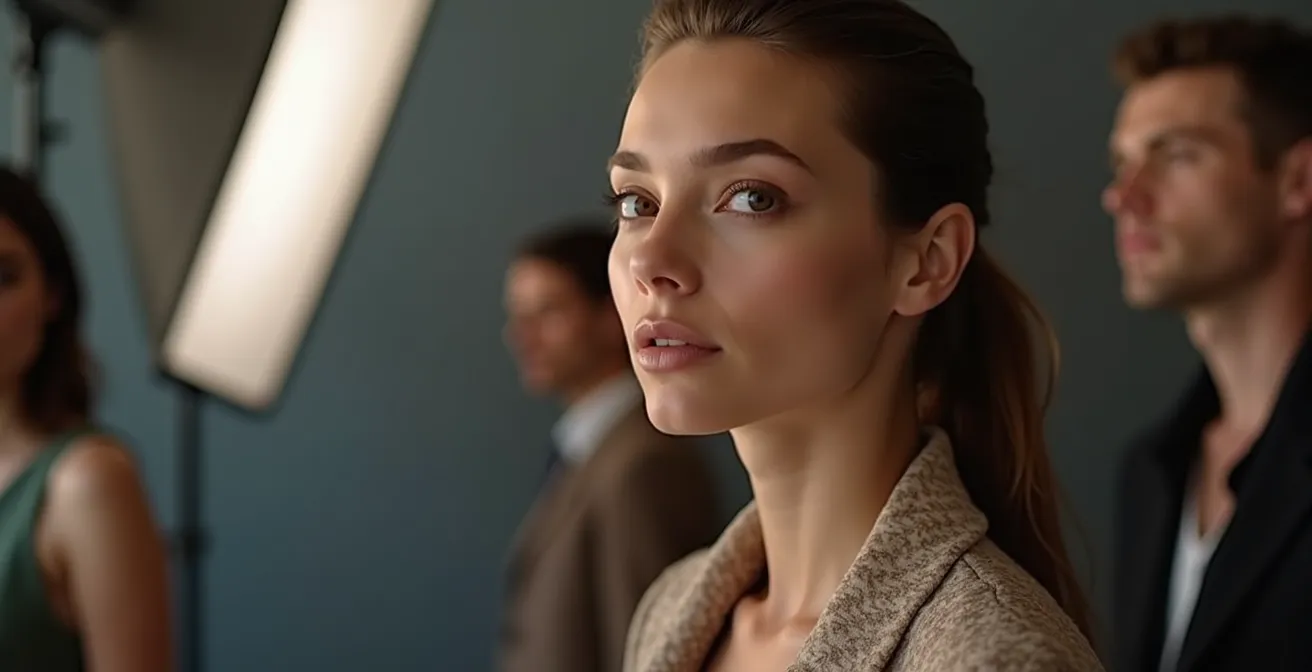
Success on a high-stakes commercial shoot isn’t about perfecting your poses; it’s about mastering your professional function within the set’s invisible power structure.
- Your role is to make the product the hero, not to be the star. This requires a mental shift from personal performance to functional execution.
- Energy is a resource to be managed strategically, and the client monitor is your performance dashboard, not a mirror for vanity.
Recommendation: Shift your focus from “looking good” to understanding the business objectives of the shoot. This framework will transform your anxiety into professional confidence.
You got the call. A six-figure commercial campaign for a major brand. The exhilaration lasts about ten seconds, and then a wave of pure terror washes over you. This isn’t just another test shoot; careers are made—and broken—on sets like these. The pressure to perform, to justify the enormous budget resting partially on your shoulders, can be paralyzing. The common advice you’ve heard a thousand times—get a good night’s sleep, practice your poses, be professional—suddenly feels laughably inadequate. It doesn’t address the crushing weight of expectation from the client, the agency, and a dozen other professionals watching your every move.
But what if the key to handling this pressure isn’t about working harder on the things you already know? What if it’s about understanding the things nobody tells you? The secret isn’t in perfecting your look, but in understanding your professional function. From a senior producer’s perspective, a model is a critical, high-value component in a multi-million dollar machine. Your anxiety stems from seeing yourself as an artist who will be judged; your confidence will come from seeing yourself as a professional who is there to execute a specific task flawlessly. It’s a fundamental mindset shift from performance to function.
This guide will give you that framework. We won’t rehash the basics. Instead, we’ll deconstruct the professional realities of a high-stakes set. We will explore why the product is the true hero, how to manage your energy like an elite athlete, and how to navigate the complex financial and legal decisions that define a top-tier career. You’ll learn to see the set not as a stage for you to shine, but as a collaborative workspace where your job is to solve a very expensive problem for the client.
This article breaks down the essential strategies you need to master. Below is a summary of the key areas we will cover to help you transition from a terrified rookie to a confident professional on any high-stakes set.
Summary: Mastering the High-Stakes Commercial Shoot
- Why the Product Must Be the Hero of the Shot, Not You?
- How to Maintain High Energy Levels During a 12-Hour Catalog Shoot?
- Commercial Buyouts vs. Day Rates: Which Payment Structure Is Better for You?
- The Mistake of Ignoring the Client Monitor That Can Cost You the Campaign
- When to Switch From Posing to Acting for Motion Campaigns?
- Why You Should Never Sign Away Image Rights “In Perpetuity”?
- Why Being Nice to the Assistant Is More Important Than Charming the Photographer?
- How to Shoot 50 Looks a Day Efficiently for E-Commerce Clients?
Why the Product Must Be the Hero of the Shot, Not You?
On a commercial set, the single most expensive mistake a new model can make is believing the shoot is about them. It’s not. It’s about the watch, the handbag, the car, or the lifestyle that the client is paying hundreds of thousands of dollars to sell. Your professional function is to be the perfect vehicle for that product. You are the context, the storyteller, the human element that makes the inanimate object desirable. When you make yourself the hero—by over-posing, competing with the product, or focusing on your “best angles”—you are actively working against the campaign’s objective.
As explained in a deep dive into fashion campaign strategy, every shot is designed to tell a story that evokes an emotion or a memory, making the clothing or product part of a larger narrative. When customers connect with that story, they want to be a part of it by buying the product. Your job is to embody that narrative, not to create your own. This means your performance must serve the brand’s values, whether it’s eco-friendly, high-fashion, or street-style. Your every expression and pose should enhance the product’s appeal, seamlessly integrating it into a desirable lifestyle. When you understand this, you stop worrying about being judged and start focusing on executing your role effectively.
Action Plan: Making the Product the Hero
- Understand the Brief: Before stepping on set, internalize that commercial photography’s goal is to make the product the focal point. Your role is supportive.
- Embody the Narrative: View yourself as representing a stage of the product’s use or lifestyle. Your poses and expressions should tell the product’s story, not your own.
- Complement, Don’t Compete: Ensure your styling, makeup, and performance enhance the product. Dramatic elements should draw attention to the item, not away from it.
- Maintain Centrality: In every shot and context, the product must remain the central, unifying element. Your performance is the thread, but the product is the tapestry’s subject.
Embracing this product-centric mindset is liberating. It removes the personal pressure to be “perfect” and replaces it with the professional goal of being “effective.”
How to Maintain High Energy Levels During a 12-Hour Catalog Shoot?
A 12-hour shoot day is a marathon, not a sprint, and your energy is your most valuable asset. Fading in the final hours is not an option when every shot costs thousands of dollars. The key is not just endurance, but strategic energy management. This involves treating your body and mind like that of a professional athlete, with planned nutrition, targeted recovery, and disciplined focus. Rookies burn out by scrolling on their phones during breaks and eating sugary craft service snacks, leading to energy crashes. Professionals know better.
The best approach is to work in focused bursts of high-intensity performance followed by deliberate recovery. Use natural breaks in the workflow, such as lighting adjustments or wardrobe changes, for strategic resets. Instead of checking social media, perform targeted stretches, practice a few moments of mindfulness, or simply close your eyes and breathe. This conserves mental energy and prevents the cognitive drain that leads to flat, uninspired performance late in the day. Nutrition is equally critical. To avoid performance-killing blood sugar spikes and crashes, you should implement a glycemic management strategy, consuming complex carbohydrates about 90 minutes before you anticipate an energy dip and keeping protein-based snacks on hand for quick breaks.
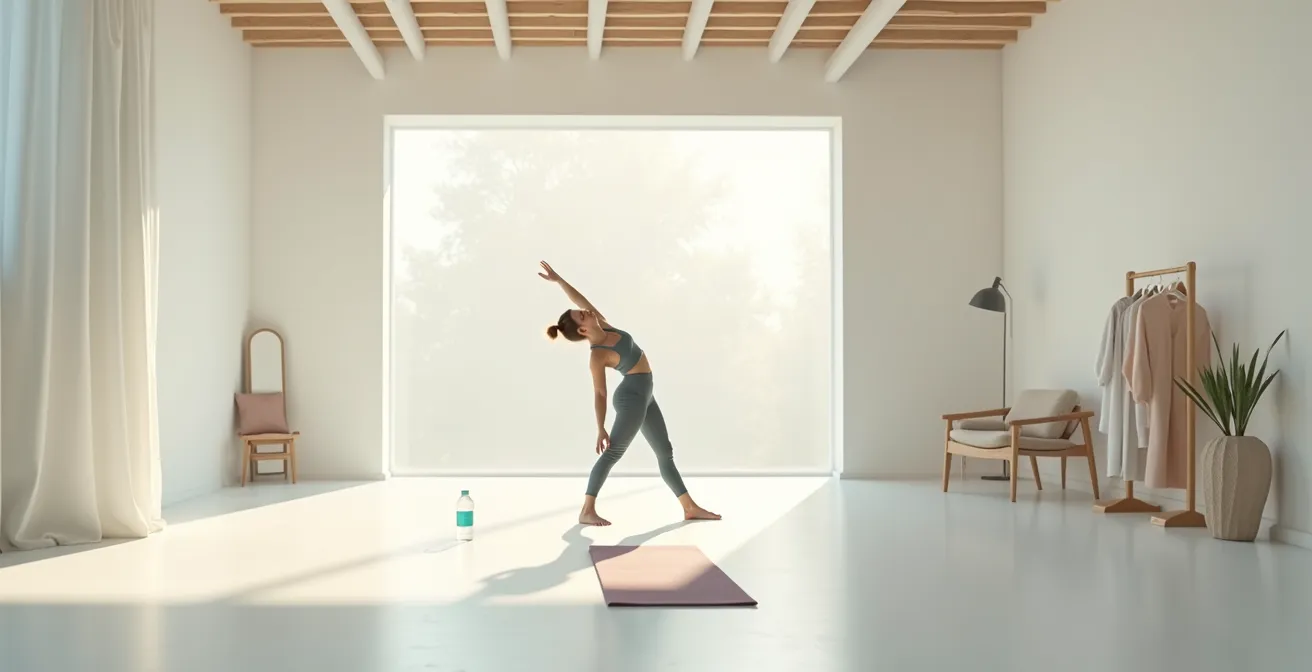
As shown in the image, even a simple, focused moment of stretching can be a powerful tool for renewal. This isn’t laziness; it’s a professional tactic. Create a “Mental & Physical Reset Kit” with essentials like a water bottle, healthy snacks, a lacrosse ball for muscle tension, and perhaps a calming essential oil. Managing your energy is not a sign of weakness; it’s a demonstration of professional foresight that directors and photographers notice and respect.
Commercial Buyouts vs. Day Rates: Which Payment Structure Is Better for You?
Understanding the financial structure of your contract is as crucial as your performance on set. The two primary payment models are a day rate and a buyout. A day rate is simple: you are paid for your time on set, typically for a 10-hour day. A buyout is more complex: it’s a larger, one-time fee that purchases the rights to use your image for a specific duration (e.g., 2 years), across specific media (e.g., print, web), and in specific territories (e.g., North America). For a high-stakes campaign, the numbers can be significant. Consider that a mid-tier campaign budget can range from $14,000 to $22,000, with model fees being a substantial portion of that.
The choice between these structures is a strategic decision that impacts your income and career trajectory. As one industry analysis puts it, this decision should be framed within a “Career Velocity vs. Financial Security” matrix. The day rate offers immediate cash flow and flexibility, while a buyout is an investment in your brand and visibility. The right choice depends entirely on your career stage and goals.
Frame the buyout decision within a ‘Career Velocity vs. Financial Security’ matrix. A day rate provides immediate income, while a buyout is an investment in your brand and future visibility. The key is analyzing when to accept a lower-paying buyout with a high-fashion brand to level up versus taking a high day-rate for less glamorous but lucrative work.
– Industry Payment Structure Analysis, Professional Photography Business Guidelines
For a rookie model, a major campaign buyout can provide a significant financial cushion and, more importantly, a powerful portfolio piece. However, it also restricts you from working with competing brands. The table below breaks down the core differences to help you make an informed decision with your agent.
| Payment Structure | Immediate Benefits | Long-term Implications | Best For |
|---|---|---|---|
| Day Rate | Immediate income, no usage restrictions, freedom to work with competitors | No residual income, limited brand exposure, may miss portfolio-building opportunities | Models prioritizing flexibility and immediate cash flow |
| Buyout (Limited Term) | Higher upfront payment, brand association benefits, potential for renewal | Usage restrictions during term, competitor limitations, must track usage compliance | Models seeking balance between income and career growth |
| Buyout (Perpetuity) | Substantial one-time payment, major brand exposure | Permanent usage rights loss, competitor exclusion forever, potential ‘digital haunting’ | Only for truly exceptional opportunities with prestigious brands |
The Mistake of Ignoring the Client Monitor That Can Cost You the Campaign
On set, there is a glowing screen surrounded by the most important people: the client, the art director, and the agency representatives. This is the client monitor, and for a rookie model, it can be a source of intense anxiety. The temptation is to avoid it, to stay in your own head and “feel” the performance. This is a catastrophic mistake. That monitor is not a tool for judging you; it is your single most important guide to success. You must learn to see it not as a mirror, but as your performance dashboard.
It’s the only place where you can see in real-time if your interpretation of the creative brief aligns with the client’s vision. The photographer might be focused on lighting and focus, but the client is looking at the overall vibe, the product placement, and the brand feel. By periodically and professionally reviewing the monitor, you can actively self-correct. Are your poses coming across as awkward? Is your expression matching the mood board? Is the product clearly visible and appealing? The monitor provides the data you need to answer these questions and adjust your performance before you waste an hour shooting something unusable.
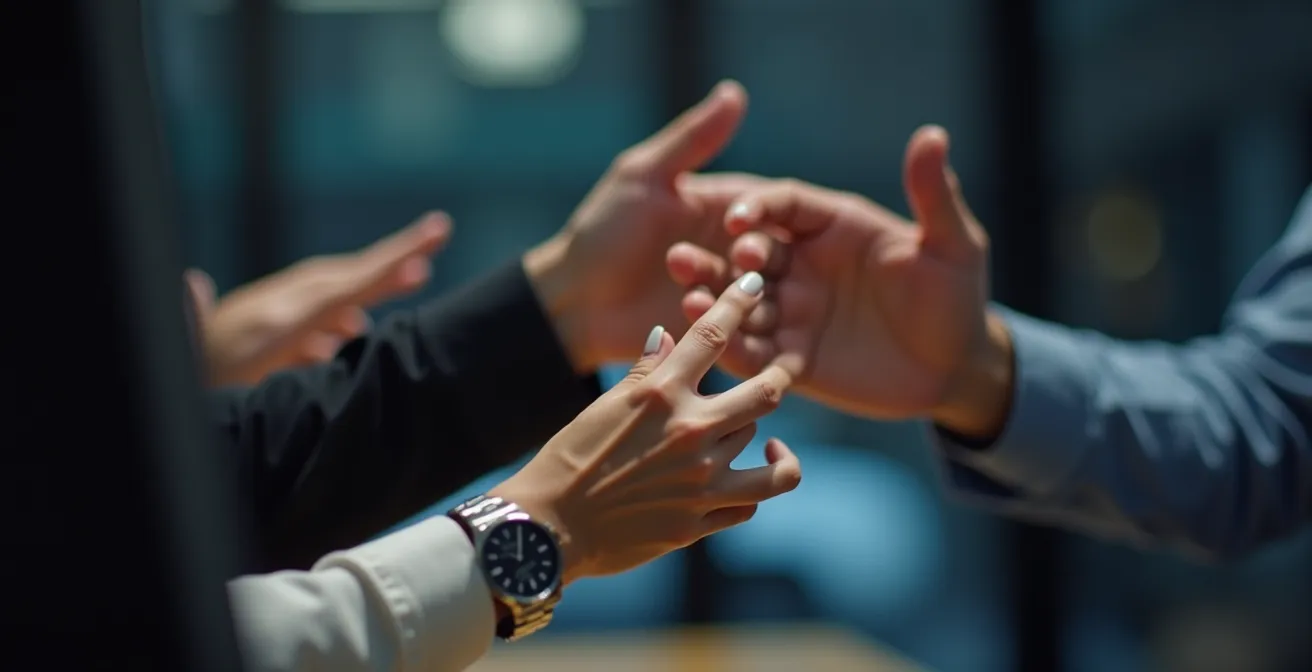
Furthermore, observing the body language of the group around the monitor is like learning to read the room from a screen. A subtle nod from the client or a furrowed brow from the art director is invaluable feedback. Don’t be afraid to ask the photographer or director, “May I have a quick look to make sure I’m hitting the right notes?” This shows you are a proactive collaborator invested in the project’s success, not a vain performer worried about your appearance. It demonstrates confidence and professionalism.
When to Switch From Posing to Acting for Motion Campaigns?
As the industry increasingly blurs the line between stills and motion, your ability to transition from a static poser to a dynamic actor is paramount. A motion campaign is not simply a series of moving poses; it’s a micro-story that requires authentic emotion and repeatable actions. The director isn’t looking for a perfect shape; they’re looking for a believable moment. Knowing when to drop the “model face” and start genuinely performing is a skill that separates good models from great ones. The creative brief is your first clue.
If the brief uses words like “scenario,” “feeling,” or describes a character, you are being hired as an actor. Your job is to embody a persona and deliver a consistent performance across multiple takes and camera angles. Unlike a stills shoot where you can offer endless variations, a motion shoot requires you to perform a specific action—laughing, walking, sipping a drink—with the exact same rhythm and emotion time and time again so the editor has consistent footage to cut together. The director will often talk about pacing and tempo; this is your signal that your movements are being choreographed for the final edit.
Here are the key signals that you need to switch your brain from “posing” mode to “acting” mode:
- The brief includes a ‘scenario’ or ‘feeling’ rather than just a ‘look’. This is the clearest indication that acting is required.
- You’re asked to perform repeatable actions, such as walking a specific path or interacting with a prop, rather than just holding static poses.
- The director discusses rhythm, pacing, or timing for the edit. This means your movements need to be consistent for cutting purposes.
- Multiple cameras are capturing the same action simultaneously. This demands a consistent performance that looks good from every angle, not just one.
This transition requires you to tap into genuine emotion and express it on cue. It’s a vulnerable but essential skill for longevity in the modern commercial world.
Why You Should Never Sign Away Image Rights “In Perpetuity”?
In the excitement of booking a major campaign, it’s easy to overlook the fine print of your contract. One of the most dangerous clauses you might encounter is “in perpetuity.” This legal term means forever. By signing it, you are giving the client the right to use your image from that shoot, anywhere in the world, in any media, for all time. This includes future technologies that haven’t even been invented yet. While the upfront payment might seem substantial, you are permanently surrendering control of your face and brand for a single paycheck.
Clients push for these rights because it saves them money in the long run. When even a single traditional fashion photoshoot costs between $2,000 and $5,000 for smaller brands, locking down images forever is a huge financial win for them. But for you, it can be a career-ending move. Imagine five years from now, your image from this campaign is still being used, preventing you from signing a lucrative deal with a competing brand. Or worse, the brand’s reputation sours, and your face is forever associated with it. This is what some agents call “digital haunting,” and it can severely limit your future earning potential.
A professional model’s career is built on carefully managed image rights. Your agent should always negotiate for limited terms (e.g., 1-2 years), with clearly defined usage. This allows for renegotiation and renewal fees if the client wishes to continue using the images, creating a long-term revenue stream for you. Never let a client or photographer pressure you into signing away perpetual rights. Here are some powerful alternatives your agent can propose:
- Propose a ‘rolling buyout’ with an initial 2-year license and options for renewal at 110% of the original fee.
- Suggest ‘capped usage’ that limits use to a specific number of impressions or defined media channels (e.g., social media only).
- Request ‘sunset clauses’ that automatically reduce the scope of usage after a certain time period (e.g., from global to national after 3 years).
- Negotiate for ‘category exclusivity’ rather than a blanket restriction, limiting conflicts to specific product types only.
- Include ‘technology clauses’ that require renegotiation for use in any future media formats not yet invented.
Key takeaways
- Your primary job on a commercial set is to fulfill a professional function: making the product the hero of the shot.
- Energy is a finite resource that must be strategically managed through planned nutrition and recovery, not left to chance.
- Understanding the on-set hierarchy and treating everyone, especially assistants, with respect is more critical for your career than charming the photographer.
Why Being Nice to the Assistant Is More Important Than Charming the Photographer?
On a chaotic, high-pressure set, it’s natural to focus your attention on the people who seem to hold the most power: the photographer and the client. This is a rookie mistake. The most influential person for your on-set experience and future career prospects might just be the photo assistant—the one hauling sandbags, adjusting lights, and getting coffee. This is the invisible power structure at play. While the photographer is focused on the creative vision, the assistant is the central nervous system of the entire operation.
As a guide to professional set etiquette explains, the assistant’s role is far more than technical. They control the flow of information, logistics, and comfort on set. They know the schedule, where the water is, and who to ask for a fan. More importantly, they are often the photographer’s most trusted confidante. Your behavior towards them—whether you are respectful and patient or demanding and dismissive—will absolutely be reported up the chain of command.
The assistant is the ‘Nervous System’ of the set. They control the flow of information, logistics, and comfort. The photographer is focused on the creative, but the assistant knows the schedule, where the water is, and who to ask for a fan. They are often the photographer’s most trusted confidante – their opinion of you will be passed up the chain and can influence future bookings.
– Professional Set Etiquette Guide, Industry Best Practices Manual
Case Study: The “Deeper Research” Factor
In a description of his casting process, famed photographer Nigel Barker revealed that after an initial screening of portfolios, he and his team do “deeper research” into the finalists, including their overall brand and aesthetic. This “deeper research” is industry code for checking references and gathering informal feedback. As the process shows, top professionals consider feedback from their entire team, including assistants, when making hiring decisions. A bad report from a trusted assistant can easily disqualify an otherwise talented model from future collaborations.
Treat every single person on set, from the producer to the production assistant, with the same level of professional courtesy. Learn their names. Say please and thank you. This simple act of respect is not just basic human decency; it is a powerful career strategy.
How to Shoot 50 Looks a Day Efficiently for E-Commerce Clients?
The world of e-commerce photography is a high-volume, high-speed game. Clients often need to shoot 50, 70, or even 100 looks in a single day. For the model, this is a test of stamina, efficiency, and precision. There is no time for artistic contemplation; success is measured in usable shots per hour. To thrive in this environment, you must develop a system. This isn’t about rushing; it’s about eliminating wasted time and movement through a combination of muscle memory and non-verbal communication.
The foundation of this system is what some call “Pose-Flow Sequencing.” Instead of thinking up new poses for each outfit, you pre-plan a sequence of 5-7 core movements and poses (e.g., front-on, 3/4 turn, walking motion, detail shot of a cuff) that you can execute flawlessly in under 30 seconds. You flow through this sequence for each look, ensuring the client gets the essential shots they need. This automates the posing process, freeing up your mental energy to focus on subtle variations in expression and embodying the feel of each garment. Combine this with “wardrobe batching”—shooting all similar items together to minimize hair and makeup changes—and you create a highly efficient workflow.
Your ability to transition quickly is also critical. Practice your outfit changes to get them under 60 seconds, including final adjustments in front of the mirror. On set, develop a simple set of non-verbal cues with the photographer for “ready,” “next pose,” or “need an adjustment.” This eliminates the constant chatter that slows a shoot down. By turning these processes into a repeatable, efficient system, you become an incredibly valuable asset to any e-commerce client, securing repeat bookings.
Your E-Commerce Efficiency Audit
- Pose Flow Inventory: List and time your 5-7 core poses. Can you execute them smoothly as a sequence?
- Transition Practice: Time your average outfit change. Identify and eliminate wasted seconds in your process.
- Non-Verbal Cues: Do you have an established, simple set of hand signals with the photographer to communicate without talking?
- The 80/20 Shot Analysis: Can you identify and perfect the 4 essential shots that make up 80% of what an e-commerce client needs?
- Workflow Integration Plan: Based on this audit, create a plan to implement one improvement (e.g., practicing pose-flow) before your next shoot.
By internalizing this professional framework, you transform pressure from a threat into an opportunity. You are no longer just a model hoping to do a good job; you are a strategic professional, equipped with the knowledge to excel in any high-stakes environment. Start applying these principles today to build a resilient and successful career.
Frequently asked questions about Professional Photoshoots
What’s the optimal shooting rhythm for maintaining peak performance?
Professional photographers recommend working in focused ‘sprints’ of high-intensity shooting followed by strategic recovery periods. Use natural breaks like lighting changes for targeted stretching or brief mindfulness exercises rather than scrolling on your phone, which can drain mental energy.
How should models structure their nutrition during 12+ hour shoots?
Implement a glycemic management strategy: consume complex carbohydrates 90 minutes before anticipated energy dips, and keep protein-based snacks readily available for short breaks. This maintains stable blood sugar and prevents performance-affecting crashes that commonly occur mid-afternoon.
How can models preserve mental stamina throughout extended shoots?
Create a ‘Mental & Physical Reset Kit’ with sensory reset tools like essential oils, a 3-minute meditation audio, and a lacrosse ball for muscle tension. Strategically allocate social energy by prioritizing essential communication with the director and photographer while maintaining polite boundaries during downtime.