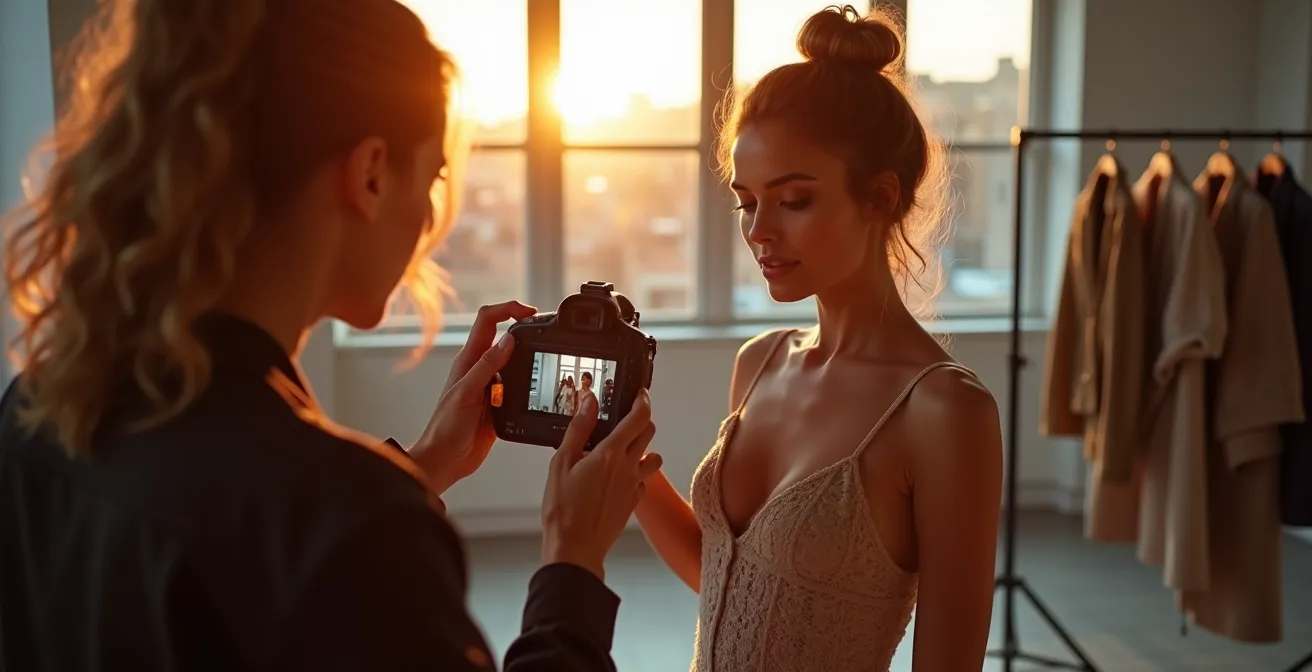
The most valuable TFP shoots are not freebies; they are strategic micro-productions where you, the model, act as the co-producer.
- Shift your mindset from passively receiving photos to actively building portfolio assets.
- Control the creative vision, resource management, and final image selection to fill specific gaps in your book.
Recommendation: Before seeking a photographer, perform a “portfolio gap analysis” to identify exactly which looks and moods are missing from your current book.
For models looking to build a powerful portfolio without a budget, “Time for Print” (TFP) or “Trade for Print” collaborations seem like the perfect solution. The common advice is to find a photographer on social media, agree on a time, and get free pictures. Yet, this often leads to a collection of disconnected, mediocre images that do little to impress agents or casting directors. The problem isn’t the TFP model itself, but the mindset behind it. Many models approach it as a passive subject rather than an active collaborator.
The real key to a successful TFP shoot lies in reframing it. Stop thinking of it as a casual favor and start treating it as a strategic micro-production. You are not just the talent; you are the creative producer, the stylist, and the art director. This shift in perspective is what separates a portfolio-filler from a career-making image. It’s about understanding the creative equity each person brings to the table and leveraging it to create a specific, high-quality asset that fills a crucial gap in your professional book.
This guide will walk you through the entire production process. We won’t just tell you *what* to do; we’ll explain the strategy behind each step, empowering you to take control and ensure every TFP shoot is a calculated move to elevate your portfolio to an agency-ready standard.
For those who prefer a visual format, the following video offers a great look into the world of professional styling and color, concepts that are central to producing a high-quality shoot.
To help you navigate this production process, we’ve broken down the essential stages of planning and executing a TFP shoot that delivers real results. The following sections cover everything from finding the right creative partners to making the final selections that will get you noticed.
Summary: A Model’s Production Guide to Strategic TFP Shoots
- Where to Find Talented Photographers Willing to Shoot TFP in Your City?
- Pinterest vs. Instagram: How to Build a Mood Board That Communicates Vision?
- Thrifting and Returns: How to Style a High-Fashion Shoot for Under $50?
- Urban vs. Nature: Which Free Locations Look Best for Portfolio Images?
- Natural or Bold: Which Makeup Look Is Missing From Your Current Book?
- Why Your Strongest Photo Should Be First and Your Second Best Last?
- Color Palettes and Textures: What the Mood Board Tells You About the Emotion?
- How to Select Portfolio Images That Secure Castings With Top Agencies?
Where to Find Talented Photographers Willing to Shoot TFP in Your City?
The first step in any production is assembling your team. In TFP, this means finding a photographer whose skill and vision align with your goals. This isn’t just about finding someone with a camera; it’s about scouting for a creative partner. Forget aimlessly scrolling through hashtags. Your search needs to be targeted. The goal is to find photographers who are also looking to build their book with high-quality, specific work, creating a balanced exchange of creative equity.
Start by exploring dedicated platforms and local communities where professionals actively seek collaboration. Websites like Model Mayhem are built for this purpose, but don’t underestimate the power of hyper-local Facebook groups. Searching for “[Your City] + TFP Photography” can connect you with a vibrant community of local artists. When you reach out, present yourself professionally. Have a clear idea of what you want to shoot—this shows you are serious and respectful of their time. It’s also worth remembering that TFP shoots have their own etiquette; for example, a one-hour session might typically yield around 10 final, edited images, so be sure to discuss deliverables upfront.
Beyond online platforms, consider contacting modeling agencies. New faces on their roster often need portfolio development and are assigned TFP shoots. This can be a great way to work with vetted photographers. Ultimately, you are looking for a collaborator, not just a service provider. A photographer who is excited by your concept is far more likely to produce exceptional work.
Pinterest vs. Instagram: How to Build a Mood Board That Communicates Vision?
Once you have a potential collaborator, you need a clear creative brief. A mood board is your most critical tool for this, acting as the visual blueprint for the entire shoot. It communicates the desired emotion, lighting, styling, and posing far more effectively than words alone. However, not all mood board platforms are created equal. While Instagram is excellent for discovering talent, its functionality for building a cohesive creative brief is limited.
For the ‘pre-production’ phase of your shoot, Pinterest is the industry standard for a reason. Its features are designed for creative planning. You can create private boards, organize them into sections (e.g., “Lighting,” “Posing,” “Styling”), and invite collaborators to contribute directly. This creates a shared, organized workspace where the entire team can align on the vision. Instagram’s “Saved Collections” are more personal and less suited for collaborative, hierarchical planning.
The following table, based on insights from creative professionals and platforms like Pixpa’s guide to TFP shoots, breaks down why Pinterest is the superior tool for communicating a professional vision.
| Feature | ||
|---|---|---|
| Board Organization | Unlimited private boards with sub-sections | Limited saved collections, less hierarchical |
| Image Quality | High-resolution pins preserved | Compressed square/vertical formats |
| Collaboration | Invite unlimited contributors to boards | Share via DM only, no joint collections |
| Discovery Algorithm | Style-based recommendations | Engagement-based visibility |
| Professional Use | Industry standard for creative briefs | Better for finding local talent |
A well-structured mood board on Pinterest shows you are a professional who has thought through the concept. It becomes the central reference point on set, ensuring that every shot taken is aligned with the original goal of your micro-production. It’s not just a collection of pretty pictures; it’s your production bible.
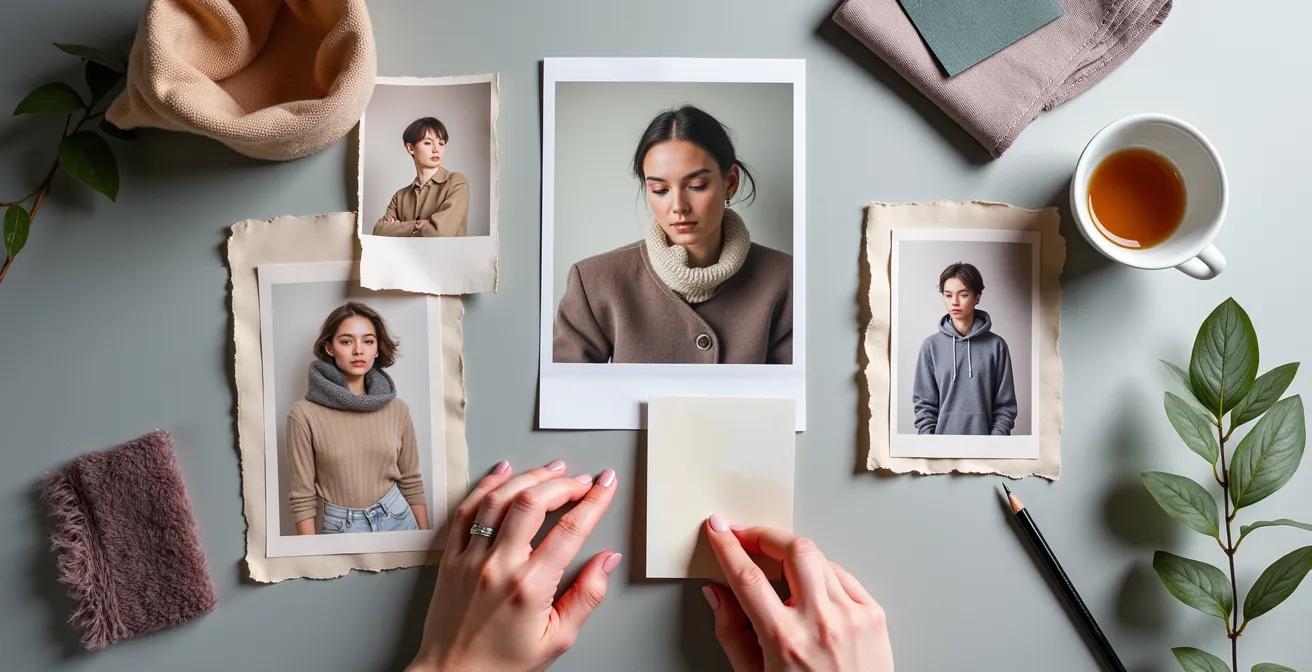
As you can see in this creative planning process, the physical or digital mood board guides every decision, from the choice of fabric to the angle of the light. It ensures everyone is working towards the same final image.
Thrifting and Returns: How to Style a High-Fashion Shoot for Under $50?
Styling is often the biggest hurdle in a no-budget TFP shoot. Without a compelling wardrobe, even the best photographer and concept can fall flat. This is where your role as a resourceful producer truly shines. The goal isn’t just to find clothes; it’s to practice resourceful styling—creating a high-impact, cohesive look that appears expensive and intentional. Thrifting is your best friend, but it requires a strategy.
Instead of randomly browsing, focus your efforts. Scout thrift stores in more affluent neighborhoods, as they often receive higher-quality donations. The best time to go is typically mid-week, like Tuesday mornings, after the weekend donation rush has been sorted. Don’t look for a full outfit. Instead, focus your limited budget on a single, powerful statement piece—a unique vintage coat, a structured blazer, or a dramatic accessory. Build the rest of the look with simple basics you already own. This approach maximizes visual impact for minimal cost.
Another professional strategy is to think beyond purchasing. Many local boutiques or vintage stores may be open to a short-term rental or loan in exchange for professional images featuring their items. Similarly, connecting with fashion design students is a win-win: they need portfolio images of their work, and you get access to unique, one-of-a-kind garments. This transforms styling from an expense into another form of collaboration.
Your Action Plan for High-Impact, Low-Budget Styling
- Scout thrift stores in affluent neighborhoods on Tuesday mornings for fresh inventory from weekend donations.
- Focus your budget on one statement piece (like a vintage coat or unique accessory) and build around it with basics.
- Negotiate package deals or short-term rentals with vintage store owners for multiple items.
- Use fabric store remnant bins to create custom wraps, drapes, or textural elements for under $10.
- Partner with local fashion design students who need portfolio images of their creations.
Urban vs. Nature: Which Free Locations Look Best for Portfolio Images?
The location is the third character in your story. A carefully chosen backdrop can elevate an image from a simple portrait to a compelling narrative. As the producer, your job is to scout a location that is not only free but also contextually right for the mood board and the type of work you want to attract. The debate isn’t simply “urban vs. nature,” but which environment best serves the emotional and commercial goal of the image.
An urban setting with strong architecture, for instance, is perfect for editorial or commercial looks. The reflected light from buildings can create a beautiful, soft-box effect, while dramatic shadows add a high-fashion edge. A natural setting, like a park or forest, lends itself to beauty, lifestyle, or romantic portraits, offering soft, diffused light through foliage. Each has distinct advantages and challenges, from navigating crowds and permit requirements in the city to being at the mercy of the weather in nature.
The following analysis breaks down how different location types impact your final portfolio images, helping you make a strategic choice.
| Location Type | Best For | Lighting Advantages | Challenges |
|---|---|---|---|
| Urban/Architecture | Editorial, high fashion, commercial | Reflected light from buildings, dramatic shadows | Permits, crowds, limited golden hour access |
| Natural/Parks | Beauty, lifestyle, romantic portraits | Soft diffused light through foliage | Weather dependent, seasonal limitations |
| Industrial/Warehouse | Edgy fashion, dramatic portraits | Large windows, interesting textures | Safety concerns, permission needed |
| Beach/Waterfront | Swimwear, fitness, lifestyle | Open shade, reflective water light | Wind, sand damage to equipment |
Beyond the aesthetic, remember the professional logistics. While many public spaces are free to use, commercial-style shoots can sometimes draw unwanted attention. Always have a model release form ready. As a Wikipedia entry on the topic notes, the legalities can be complex and are best addressed upfront.
Legal requirements for a model release vary from place to place and from situation to situation, as does the situation regarding copyright.
– Wikipedia Contributors, Time for Print – Legal Considerations
Natural or Bold: Which Makeup Look Is Missing From Your Current Book?
Before you even touch a makeup brush, your first step is a critical portfolio gap analysis. Look at your current book with the eyes of a casting director. What roles are you not being considered for? Is your portfolio filled with clean, commercial beauty shots but lacks a dramatic, high-fashion editorial look? Or is it the other way around? The goal of a TFP shoot is to create a specific asset that fills one of these gaps, demonstrating your range as a model.
Your makeup choice should be a direct answer to this analysis. Don’t just do a look you like; create the look your portfolio *needs*. This strategic decision shows agencies you understand marketing yourself as a product. A portfolio that showcases both a clean, natural face (showing your skin texture and features) and a bold, transformative look proves your versatility. This is crucial, as a well-crafted portfolio represents what can be 70-80% of a potential client’s first impression of your capabilities.
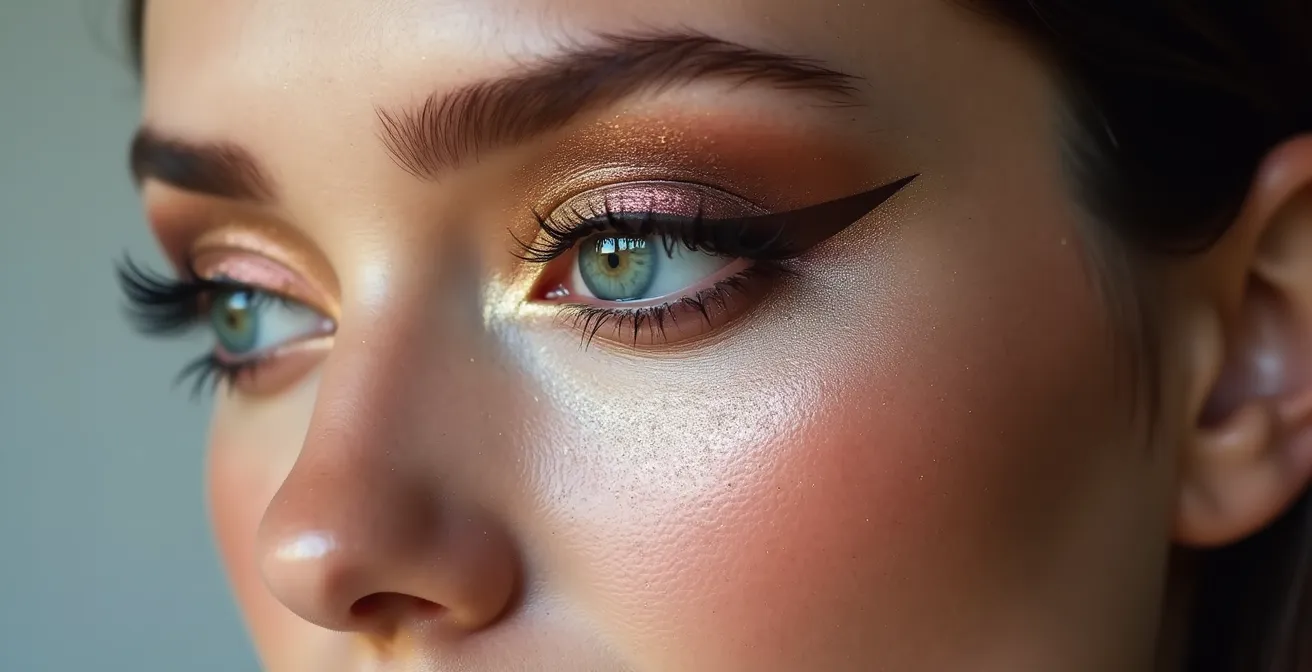
This image perfectly illustrates the power of range. On one side, a clean, commercial-ready look. On the other, a bold, editorial statement. Having both in your book instantly doubles your marketability. If you’re doing your own makeup, invest time in practicing the specific look from your mood board. If you’re collaborating with a makeup artist (MUA) on a TFP basis, your detailed mood board is essential for communicating the required look precisely.
Deciding on the look is not about personal preference; it’s a calculated business decision. A model who can convincingly portray both natural beauty and avant-garde character is a valuable and bookable asset.
Why Your Strongest Photo Should Be First and Your Second Best Last?
The micro-production process doesn’t end when the camera is packed away. The “post-production” phase, where you curate and sequence your final images, is just as critical. A great portfolio is more than a collection of strong images; it’s a strategically arranged narrative that guides the viewer’s perception. The order of your photos leverages powerful psychological principles: the primacy effect and the recency effect. People best remember what they see first and what they see last.
This is why you must open with a showstopper. Your very first image should be your “Anchor Image”—the single most powerful shot that defines your brand and instantly captivates the viewer. This first impression is paramount; research from creative platforms like Format indicates that 63% of clients will judge you on your portfolio before considering anything else. Placing a weaker image first risks losing their attention before they’ve even seen your best work.
The sequence that follows should tell a story of your range, but the final image is your last chance to make an impression. Placing your second-strongest photo at the very end leverages the recency effect, leaving the casting director with a lasting positive memory. This conscious sequencing transforms your portfolio from a simple gallery into a persuasive presentation.
Here is a strategic framework for sequencing your portfolio:
- Lead with your Anchor Image: The one shot that best represents your target market and unique look.
- Show your range: Follow with 3-4 diverse images that maintain a high level of quality and consistency.
- Place niche work in the middle: Experimental or highly specific shots should go where viewer attention may naturally dip.
- Build momentum: The images leading to the end should get progressively stronger.
- Close with your second-best shot: End on a high note to leave a powerful, lasting impression.
Color Palettes and Textures: What the Mood Board Tells You About the Emotion?
A sophisticated mood board does more than just show what the shoot will look like; it dictates what it will *feel* like. As a creative producer, you need to learn how to deconstruct your own mood board to analyze its core emotional message. The dominant color palettes and recurring textures are your primary clues. Are you pinning images with bright, primary colors and soft cottons, or are they filled with muted earth tones and raw linens?
Each choice carries a specific emotional weight and communicates to a different market segment. A palette of bright pastels and primary colors often reads as youthful, optimistic, and approachable, making it a perfect fit for commercial and lifestyle brands. Conversely, a board dominated by muted earth tones (khaki, beige, ochre) and rich textures suggests sophistication, naturalism, and a grounded aesthetic, which is highly sought after in high-fashion editorial.
Understanding this visual language allows you to be incredibly intentional. If your goal is to book work with luxury brands, your TFP mood board should reflect that. It should feature monochromatic schemes or deep jewel tones, which convey a sense of timelessness, drama, and opulence. By consciously selecting and analyzing these elements during your planning, you ensure the final images will resonate with your target clients. The emotion isn’t an accident; it’s engineered from the very first pin.
Key Takeaways
- Treat TFP as a strategic “micro-production” where you are the co-producer, not just the subject.
- Your primary goal is to fill a specific “gap” in your portfolio with a high-quality asset, not just to get free photos.
- A detailed mood board on Pinterest is your most critical tool for communicating a unified vision to the entire creative team.
How to Select Portfolio Images That Secure Castings With Top Agencies?
The final stage of your production is asset curation. You may have dozens of great photos from your shoot, but only a select few belong in your professional portfolio. This is where you must be ruthless and objective. Your goal is not to choose your personal favorites, but to select the images that function as effective marketing tools to secure castings. Top agencies and clients look for specific technical and artistic markers of a professional model.
First and foremost, agencies have zero tolerance for technical flaws. Every image you select must have tack-sharp focus on the eyes. Any softness or motion blur is an immediate rejection. Beyond technicals, your selection must demonstrate range and professionalism. This means including at least two clean beauty shots that clearly show your natural features and skin texture, alongside shots that prove you can embody different characters or moods convincingly. Consistency in color grading across the selected images is also vital; it shows a professional and cohesive presentation.
Before finalizing your selection, get an outside opinion. You are too close to the project. Test your potential portfolio images with an industry professional—a photographer, an agent, or a seasoned model—who can provide objective feedback. As the Backstage editorial team points out, these collaborations are also about building your network.
Connections: Photographers and models can use TFPs to make connections with people who may eventually gain some ground in the photo and modeling industry.
– Backstage Editorial Team, The Model’s Guide to TFP Photo Shoots
This final selection process is your last quality-control checkpoint. It ensures that every image you present is a polished, strategic asset ready to work for you.
By adopting this producer mindset, you transform every TFP opportunity from a gamble into a strategic investment in your career. Start planning your next micro-production today to create the images that will get you noticed and, ultimately, get you booked.