
Constant, high-heat styling on set inflicts industrial-level damage that typical conditioners can’t fix, putting a model’s career at risk. The solution lies in shifting from simple “hair care” to a strategic “hair asset management” system. This trichologist-developed guide provides a professional framework for damage triage with targeted molecular repair, on-set “follicle diplomacy” to reduce heat exposure, and passive recovery techniques that protect and rebuild your most valuable professional asset, even on a demanding schedule.
The smell is unmistakable: the acrid scent of hair scorching under a 450°F flat iron, for the fifth time this week. You feel the fine snap of another strand giving way near the root. For a professional model, this isn’t a rare mishap; it’s a daily occupational hazard. Thirty days of back-to-back shoots can feel like a death sentence for your hair, leaving it brittle, fried, and fragile. The constant cycle of washing, blasting with hot air, and aggressive styling degrades the very structure of the hair fiber, leading to breakage that can compromise your look and, ultimately, your bookings.
The standard advice—use a heat protectant spray, apply a weekly mask—is well-intentioned but fundamentally inadequate for the level of stress your hair endures. It’s like putting a bandage on a structural problem. These generic tips fail to address the cumulative, deep-level damage that threatens your livelihood. Your hair isn’t just hair; it is a critical professional asset that requires a far more sophisticated management strategy, much like a financial portfolio.
But what if the key wasn’t simply to find a “miracle” product, but to adopt a systematic, scientific approach to hair preservation? This guide reframes the entire conversation. We move beyond basic tips to introduce a professional framework for hair asset management. This system is built on the trichological principles of damage triage, preventative science, and proactive communication. It is designed to give you, the model, control over your hair’s health and, by extension, your career’s longevity.
Throughout this guide, we will deconstruct the science of heat damage, establish a clear protocol for choosing the right repair treatments, provide scripts for navigating on-set challenges, and reveal strategies to repair your hair even while you sleep. This is your professional playbook for reversing damage and ensuring your hair remains a bankable asset, not a liability.
This article provides a comprehensive system for protecting and restoring your hair. Below, you will find a structured guide covering everything from the science of repair products to the professional etiquette that safeguards your career.
Summary: A Strategic Guide to On-Set Hair Preservation
- Olaplex and K18:Fitness, Plus-Size, or Parts: Which Modeling Niche Maximizes Your Income Potential?
- Tape-Ins vs. Clip-Ins: Which Extensions Cause the Least Scalp Damage?
- The Sunday Detox: How to Remove Hairspray Buildup Without Stripping Moisture?
- How to Politely Ask the Stylist to Turn Down the Heat Tool?
- Silk Pillowcases and Masks: The Lazy Girl’s Guide to Hair Repair?
- Why Cutting Your Hair Without Asking Your Booker Can Get You Shelved?
- Phone Down, Head Up: The Etiquette of the Makeup Station?
- How to Do Your Own “No-Makeup” Makeup for Castings Like a Pro?
Olaplex and K18:Fitness, Plus-Size, or Parts: Which Modeling Niche Maximizes Your Income Potential?
In the world of professional modeling, your hair is an asset, and its maintenance is a business expense. When severe heat damage occurs, reaching for a repair product isn’t a luxury; it’s a critical investment. However, not all treatments are created equal. The two dominant players, Olaplex and K18, function differently and should be deployed based on a strategic “damage triage” approach. Think of Olaplex as your preventative tool and K18 as your emergency-room intervention.
Olaplex works by rebuilding disulfide bonds, the internal “ladder rungs” that give hair its strength. It excels at mitigating damage from chemical services like bleaching and coloring. For a model undergoing frequent color changes, incorporating the full Olaplex system is a wise, long-term protective strategy. It works from the inside out to maintain structural integrity before catastrophic failure occurs.
K18, conversely, is a leave-in molecular repair mask that reconnects broken polypeptide (keratin) chains. Its primary strength is speed and efficacy against heat and mechanical damage. A 2024 comparative study published in Cosmetics journal confirmed that K18 significantly improved hair brightness and lightness, indicating repair at a biomimetic level. For a model fresh off an intense shoot with visible heat damage, K18’s four-minute activation time provides rapid, targeted repair that can make the difference between healthy-looking hair and a cancelled booking. The choice isn’t about which is “better,” but which tool is right for the specific type of damage your hair has sustained.
Ultimately, a savvy model might use both: Olaplex for foundational strength during less intense periods and K18 as a high-impact treatment to reverse acute damage after a particularly grueling job.
Tape-Ins vs. Clip-Ins: Which Extensions Cause the Least Scalp Damage?
For many models, hair extensions are a non-negotiable part of the job, required for adding volume or length for a specific look. However, the wrong choice can lead to devastating consequences, including traction alopecia—hair loss caused by constant pulling. Choosing the least damaging option is a critical component of hair asset management. The primary trade-off is between the convenience of temporary solutions and the longevity of semi-permanent ones, each with a different risk profile for your scalp and natural hair.
Clip-in extensions represent the lowest-risk option. They are applied and removed daily, placing no long-term stress on the hair follicles and involving no adhesives or heat for application. Their main drawback is the need for daily reapplication, which may not be feasible for multi-day shoots. Tape-ins, which last for several weeks, offer a more durable solution but introduce the risk of damage from the adhesive and subsequent removal process. More aggressive methods like keratin bonds or micro-links, while long-lasting, significantly increase the risk of follicle tension and breakage.
The following table, based on industry analysis, provides a clear risk assessment for models who must use extensions. A recent market analysis highlights their prevalence, making this decision crucial.
| Extension Type | Application Time | Damage Risk | Heat Styling Compatible | Multi-Day Shoot Durability |
|---|---|---|---|---|
| Clip-ins | 5-10 minutes | Minimal (no adhesive/heat) | Yes | Requires daily reapplication |
| Tape-ins | 30-60 minutes | Low-Moderate (adhesive based) | Limited | Lasts 4-8 weeks |
| Keratin bonds | 3-4 hours | Moderate-High (heat applied) | Yes | Lasts 3-6 months |
| Micro-links | 2-3 hours | Moderate (tension based) | Yes | Lasts 2-3 months |
Case Study: The High Cost of Improper Extensions
The story of Jayne Richardson, a 27-year-old model, serves as a powerful cautionary tale. She lost over half her hair due to poorly fitted, glued-in extensions that were attached to large sections of hair instead of tiny ones. The immense tension pulled her hair out directly from the roots. Her recovery was a long and expensive process, requiring the removal of the damaging extensions and a two-year restoration plan involving six repair sessions that cost £500 each. This case underscores the financial and professional fallout that can result from a single poor choice in hair extension method.
For models, the clear recommendation is to default to clip-ins whenever possible. If a longer-term solution is contractually required, meticulous professional application and removal of tape-ins is the next best option, with a scheduled “rest period” for your scalp between installations.
The Sunday Detox: How to Remove Hairspray Buildup Without Stripping Moisture?
After a week of shoots, a model’s hair is often caked in layers of hairspray, texturizers, and serums. This product buildup suffocates the hair shaft, blocks moisture from penetrating, and leaves the hair dull and unresponsive. A simple wash is often insufficient. A weekly “Sunday Detox” is a non-negotiable ritual to reset your hair’s ecosystem, but it must be done correctly to avoid stripping the hair of its natural oils and exacerbating dryness and damage.
The key is a professional double-cleanse protocol that dissolves buildup before gently washing it away. This method preserves the hair’s delicate moisture balance. The first step involves using an oil—like jojoba or argan—on dry hair. Oil is lipophilic, meaning it is attracted to other oils and polymers found in styling products. Massaging it in breaks down stubborn, water-resistant buildup (like silicones and waxes) far more effectively than a water-based shampoo alone. This pre-treatment prepares the hair for a gentle, effective cleanse.
This macro-level view shows what you are fighting: product residue sealing off the hair’s cuticle, preventing any repair or moisture from getting in.
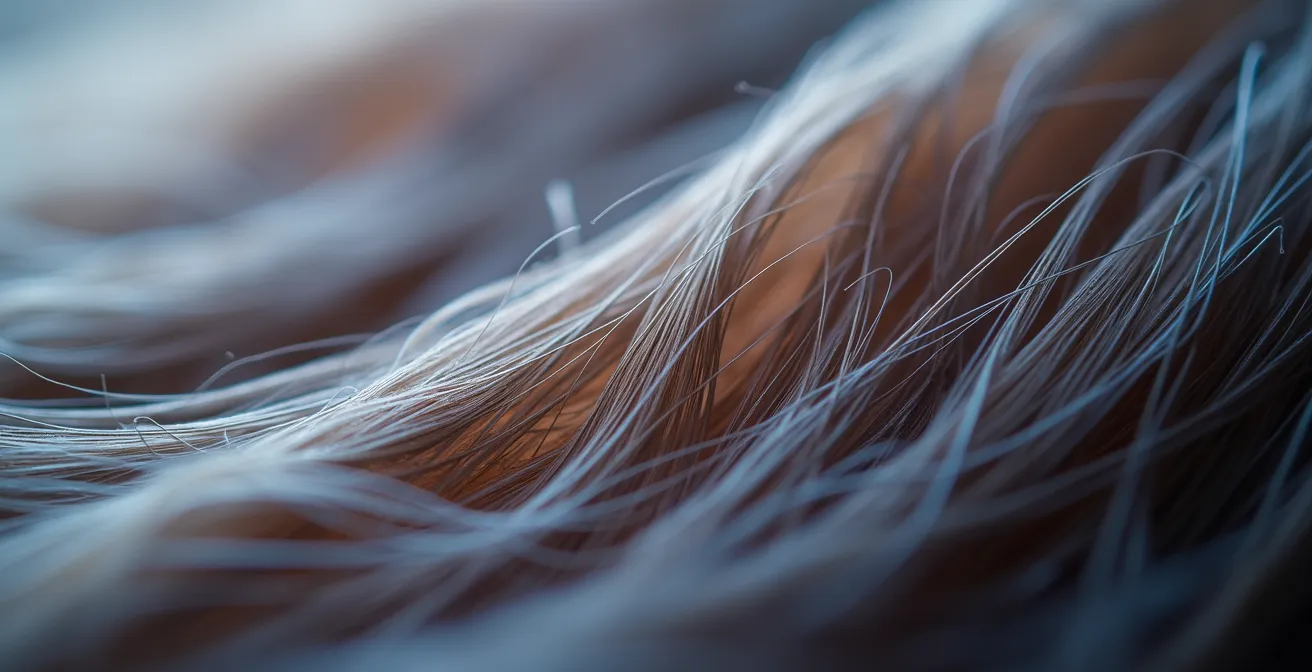
Once the buildup is loosened, the second step is a gentle wash with a sulfate-free moisturizing shampoo. For models exposed to hard water in different cities, a chelating rinse (using distilled water and vitamin C) can be added to remove mineral deposits that cause dullness. The final, critical step is a cold water rinse at around 15-20°C. This temperature shock causes the hair cuticle—the protective outer layer you see in the image—to constrict and lie flat, sealing in the benefits of any subsequent conditioning treatment and dramatically increasing shine.
- Step 1: Apply jojoba or argan oil to dry hair, focusing on areas with the most product buildup. Let it sit for 5-10 minutes.
- Step 2: Rinse thoroughly with lukewarm water, then apply a sulfate-free moisturizing shampoo, focusing on the scalp.
- Step 3 (Optional): For extreme buildup or hard water exposure, create a chelating rinse with distilled water, a pinch of vitamin C powder, and a drop of glycerin. Pour it over the hair after shampooing.
- Step 4: Apply your targeted repair mask (moisture or protein, depending on your hair’s needs).
- Step 5: Finish with a final, cold water rinse to seal the cuticle and lock in the treatment.
This methodical approach transforms a simple wash into a restorative treatment, ensuring your hair starts the week as a clean, receptive canvas for any necessary styling.
How to Politely Ask the Stylist to Turn Down the Heat Tool?
The makeup chair can be an intimidating space. You are there to be transformed, and the stylist is the expert in charge. Questioning their methods, especially regarding heat settings, can feel confrontational. Yet, silently enduring scorching temperatures is a fast track to irreversible damage. The ability to advocate for your hair’s health politely and professionally is a crucial skill. This is the art of “follicle diplomacy.” It’s not about making demands; it’s about collaborative problem-solving.
Stylists are under pressure to create a look that lasts all day under hot lights. They often default to high heat to ensure the style holds. The key to a successful negotiation is to frame your request in a way that aligns with their goal. Instead of saying, “That’s too hot,” which can sound like a criticism of their technique, you can position it as a quirk of your hair that requires a specific approach to achieve their desired outcome. This makes you a knowledgeable partner in the process, not a difficult client.
Professional hairstylists themselves offer the best scripts for this situation. As recommended in professional hair care guides, a collaborative and informative approach is most effective. The Wella Professionals guide provides an excellent template for this conversation:
My hair is in a recovery phase at the moment. To ensure it holds your beautiful styling all day, could we start with a lower heat setting and see how it responds?
– Professional Communication Script, Wella Professionals Hair Care Guide
This script works because it does three things perfectly: it provides a valid reason (“recovery phase”), it compliments the stylist (“your beautiful styling”), and it proposes a low-risk experiment (“start lower and see”). It shifts the dynamic from a confrontation to a partnership, protecting both your hair and your professional relationships.
Silk Pillowcases and Masks: The Lazy Girl’s Guide to Hair Repair?
While often marketed as a luxurious indulgence, using silk accessories is one of the most effective strategies for passive recovery—repairing and protecting hair without any active effort. For a model with a grueling schedule, maximizing recovery during downtime is essential. The hours you spend sleeping or commuting are a powerful, untapped opportunity to mitigate damage. The science behind this is rooted in two principles: minimizing friction and managing temperature exposure.
Cotton pillowcases, while comfortable, have a rough texture at a microscopic level. As you toss and turn during sleep, these fibers grab onto your hair’s cuticle, lifting it and causing frizz and micro-breakage. Silk, with its incredibly smooth surface, allows hair to glide without friction. This simple switch prevents hundreds of small, damaging events every night. Over a month of intensive shoots, models who implement passive recovery techniques like using silk pillowcases and silk-lined beanies for commuting can experience up to 50% less breakage compared to those who don’t.
Furthermore, managing heat isn’t just about styling tools. The structural integrity of hair is permanently compromised at high temperatures. In fact, research from Dyson’s hair science laboratory confirms that temperatures over 300°F (150°C) trigger an irreversible change in the hair’s protein structure, converting α-keratin to β-keratin. This damage is cumulative and cannot be fully reversed. While silk won’t undo this, it helps by preventing the additional friction-based damage that weakens an already compromised hair fiber. Using silk scrunchies instead of traditional elastic bands further reduces tension and snagging during the day, particularly when hair is pulled back at the makeup station.
This isn’t a “lazy” guide; it’s an intelligent one. By integrating silk accessories into your daily life, you are implementing a 24/7 defense and repair strategy that requires zero extra time but yields measurable results in the health and resilience of your hair.
Why Cutting Your Hair Without Asking Your Booker Can Get You Shelved?
For most people, a haircut is a personal choice. For a professional model, it’s a business decision with serious financial implications. A spontaneous, unapproved haircut can get you “shelved”—taken off the agency’s active roster—because it fundamentally alters the product you are paid to represent. Your hair’s length, color, and style are part of your established “brand,” which clients book based on your portfolio and digitals. An unexpected change can create a continuity nightmare for pre-booked campaigns and make you unsuitable for jobs you were previously perfect for.
Clients and brands invest heavily in campaigns where a consistent look is paramount. The global hair extension market alone illustrates the scale of this industry. Fortune Business Insights reports that the market reached $2.72 billion in 2024, demonstrating the immense value placed on specific hair aesthetics. When a brand books you for a multi-shoot campaign, they are booking the look you have *now*. Showing up with a bob when they booked your long hair can be a breach of contract, potentially costing your agency and the client thousands of dollars and damaging your professional reputation.
This is the essence of hair asset management. Your look is a commodity, and any changes must be managed with the same strategic foresight as any other business decision. This requires clear communication and approval from your agent, who understands your marketability and existing commitments. A proposed change should be presented as a strategic rebranding, not an impulse.
Your Action Plan: Professional Hair Change Protocol for Models
- Create a Vision: Develop a mood board showcasing the proposed hair change and articulate how it repositions or enhances your casting potential and brand.
- Consult Your Agent: Schedule a formal meeting with your booker to present your vision and discuss the strategic implications and timing of the change.
- Analyze Financial Impact: Work with your agent to review all confirmed and potential bookings to ensure the change doesn’t conflict with continuity clauses.
- Update Assets Immediately: Book a session for new digitals and headshots to be taken within 24-48 hours of the approved change.
- Deploy the New Look: Ensure all professional materials, including your online portfolio and physical comp cards, are updated with your new look within one week to avoid confusion.
By following a professional protocol, you transform a potentially career-damaging impulse into a strategic career move, executed in partnership with your agency.
Phone Down, Head Up: The Etiquette of the Makeup Station?
The time spent in the hair and makeup chair can feel like a lull in a hectic shoot day, making the temptation to scroll through your phone almost irresistible. However, this seemingly harmless habit is not only unprofessional but also actively detrimental to your hair’s health. Good “chair etiquette” is more than just politeness; it’s an active form of on-set hair protection. Your posture and attention directly impact the stylist’s ability to work effectively and safely.
When you look down at your phone, your head tilts forward and moves unpredictably. This forces the stylist to work at awkward angles, chase your head with hot tools, and often results in uneven tension and pulling on the hair follicles. As professional guidelines point out, this directly compromises the quality and safety of their work.
Constant phone-checking causes head dips and movements that force the stylist to work at awkward angles, potentially leading to more pulling and uneven heat application.
– Professional Hair Stylist Guidelines, Wimpole Clinic Hair Care Research
Instead of zoning out, you should use this time for active hair intelligence gathering. Keeping your phone down and your head up allows you to be an engaged participant. This is your opportunity to observe the products being used, learn professional techniques, and build a positive rapport with the styling team. Asking questions like, “That product smells amazing, what are its heat protection properties?” not only provides you with valuable information for your own hair care but also fosters a collaborative atmosphere. This rapport is what makes it easier to have conversations about heat settings, as discussed in the “follicle diplomacy” section.
By staying present, you are not just being respectful of the artist’s craft; you are actively managing your professional asset, minimizing physical stress on your hair, and gathering crucial data to better care for it off-set.
Key Takeaways
- Shift from basic “hair care” to a “hair asset management” system to protect your career.
- Use a damage triage approach: Olaplex for foundational bond-building and K18 for rapid, post-heat molecular repair.
- Advocate for your hair’s health on set with “follicle diplomacy”—collaborative language that gets results without causing friction.
How to Do Your Own “No-Makeup” Makeup for Castings Like a Pro?
The concept of “no-makeup” makeup for castings is well-understood: clients want to see a clean, natural canvas. This principle must also extend to your hair. A casting is not the time for elaborate, heat-styled looks. On the contrary, it is a crucial opportunity to practice strategic heat budgeting. Think of your hair’s tolerance to heat as a finite weekly budget. You “spend” it on paid shoots where intensive styling is required and “save” it on days like castings and personal time.
Arriving at a casting with simple, healthy, air-dried or no-heat styled hair accomplishes two critical goals. First, it gives the casting director a clear and honest picture of your hair’s natural texture, length, and health—which is exactly what they need to see. Second, and more importantly, it provides your hair with a vital rest and recovery day, allowing it to re-moisturize and de-stress from the demands of on-set styling. Every day you avoid heat is a day your hair is actively repairing itself.
A polished, professional casting look can be achieved without ever plugging in a hot tool. The focus should be on clean, well-maintained hair that looks effortless. Here are some go-to, hair-safe styles for any casting:
- The Sleek Low Bun: A timeless and polished option. Use a silk scrunchie to prevent breakage and a wax stick to tame flyaways for a clean silhouette without heat.
- Enhanced Natural Texture: Embrace your hair’s natural pattern. Work a small amount of lightweight shine serum or leave-in conditioner through air-dried hair to define texture and reduce frizz.
- The Classic Ponytail: Simple and effective. Secure with a silk or fabric-covered tie and ensure the hairline is neat.
By strategically scheduling your castings and personal appointments, you can create a calendar that maximizes these crucial heat-free recovery days. This proactive management of your “heat budget” is the ultimate expression of a model who treats their hair not as an afterthought, but as the valuable, career-defining asset it is.