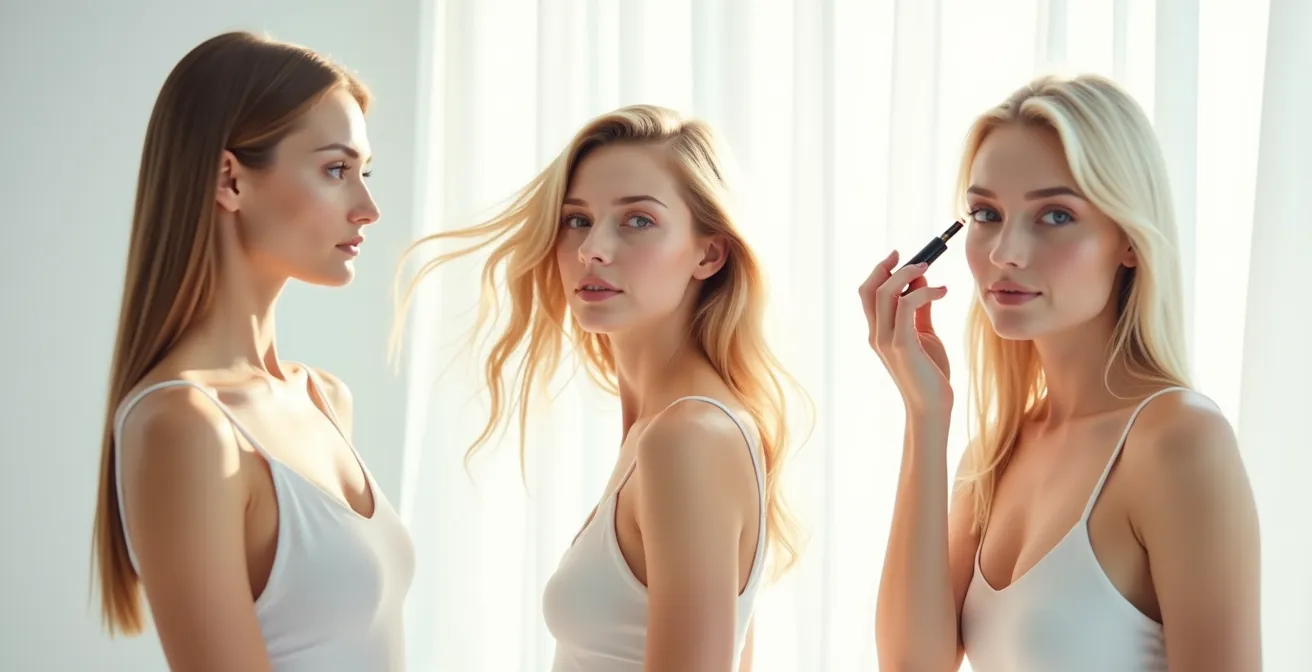
The highest earnings in beauty modeling are unlocked not by generic appeal, but by strategically specializing in a high-value niche that solves a specific, costly problem for brands.
- Pristine skin for “no-retouching” campaigns directly reduces a brand’s post-production budget, justifying premium rates.
- Unique skin tones and mature features provide brands with crucial access to untapped, high-spending consumer demographics.
- Developing technical skills, like flawless makeup application on video, allows you to stack content creation fees on top of traditional modeling rates.
Recommendation: Instead of being a generalist, identify your most unique physical trait or skill and market it as a specialized business asset to clients who value that specific solution.
For models navigating the beauty industry, the path to high earnings can seem opaque. The conventional wisdom often revolves around building a versatile portfolio and being a chameleon, ready for any casting. But while versatility has its place, the most lucrative contracts aren’t won by being a jack-of-all-trades. They are secured by specialists who understand the market’s underlying economic drivers. The question isn’t just “Do I focus on skin, hair, or makeup?” but rather, “Which specific problem within these categories can I solve for a brand better than anyone else?”
The industry is shifting. Brands are no longer just buying a “look”; they are investing in assets that deliver a tangible return, whether through reduced costs, access to new markets, or enhanced consumer trust. A model with flawless, unretouched skin is a direct cost-saving measure. A model representing an under-served demographic is a key to unlocking billions in consumer spending. Thinking like a business—understanding your unique value proposition and the client’s financial motivation—is the real secret to moving from standard day rates to career-defining contracts.
This isn’t about chasing trends; it’s about strategic positioning. This guide will break down the highest-paying niches in the beauty industry from an agent’s perspective. We will analyze the specific market demands and financial incentives that make certain specializations more profitable than others, empowering you to market yourself not just as a face, but as an indispensable business partner.
To navigate this complex landscape, we’ve structured this analysis to reveal the financial opportunities within each key specialization. This breakdown will guide you through the market forces that dictate model compensation, helping you pinpoint where your unique attributes can command the highest value.
Summary: Unlocking Top Earnings in Beauty Modeling
- No Retouching Clauses: Is Your Skin Ready for the Clean Beauty Market?
- How the Demand for Diverse Skin Tones Is Reshaping Beauty Contracts?
- Modeling at 40+: Why Skincare Brands Are Desperate for Mature Faces?
- Tutorials and Textures: Can You Apply Lipstick Perfectly on Video?
- Pharma vs. Luxury: Which Beauty Clients Have the Biggest Budgets?
- Hands, Feet, and Lips: Do You Have What It Takes to Be a Parts Model?
- Why Moving to the German Market Can Extend Your Career by 10 Years?
- Why a Monthly Facial Is a Tax-Deductible Business Expense for Models?
No Retouching Clauses: Is Your Skin Ready for the Clean Beauty Market?
The single most valuable asset in modern skincare modeling is skin that requires zero post-production. As consumer demand for authenticity grows, brands are increasingly adopting “no retouching” policies. This isn’t just a marketing trend; it’s a significant financial incentive. With the clean beauty market expected to reach $28.59 billion by 2033, the demand for models who embody this “raw beauty” ethos is skyrocketing. Brands are willing to pay a premium for models whose skin quality saves them thousands in retouching fees and aligns them with this lucrative market segment.
This is your value proposition: your skin isn’t just a canvas; it’s a cost-saving mechanism. A brand that can shoot a campaign and go to print without extensive digital alteration has a faster, cheaper, and more authentic path to market. Your ability to deliver this is a negotiable asset. This means maintaining your skin with clinical precision is no longer just about looking good; it’s about ensuring you can meet the technical demands of 4K and 8K video, where every pore is visible. The expectation is perfection, and the compensation reflects that.

As the image above demonstrates, the standard is no longer just “clear skin” but a visible, healthy texture that looks credible under macro lenses. A casting director for a high-end serum isn’t just looking for a pretty face; they’re looking for a model who can guarantee a flawless base image, mitigating the risk and cost of post-production. If you can confidently sign a contract with a no-retouching clause, you immediately place yourself in the top tier of skincare models.
How the Demand for Diverse Skin Tones Is Reshaping Beauty Contracts?
For decades, the beauty industry operated within a narrow spectrum of skin tones. This is no longer the case. The shift toward inclusivity is not just an ethical imperative; it’s one of the most significant economic opportunities for brands and models alike. When research reveals that 75% of consumers avoid non-diverse ads, it sends a clear financial signal: representation equals revenue. Models with unique and underrepresented skin tones are no longer a niche; they are a strategic necessity for brands wanting to capture a global and increasingly discerning market.
This demand creates a powerful negotiating position. The scarcity of models who can authentically represent specific undertones (e.g., deep olive, cool red) means you can command higher rates and secure more favorable contract terms. This specialization goes beyond simply being “diverse”; it’s about marketing yourself as the definitive face for a specific demographic that brands are desperate to reach. The data on consumer dissatisfaction further highlights this gap in the market.
Black consumers are 5.7 times more dissatisfied with makeup products and services than non-Black consumers.
– McKinsey & Company, Beauty E-Commerce Industry Analysis
This dissatisfaction represents a multi-billion dollar problem that brands are trying to solve, and you, as a model, are part of the solution. Your contract can reflect this value. Consider negotiating for “exclusivity clauses” for your specific skin tone category or “BYOF (Bring Your Own Foundation)” clauses that account for the cost and expertise required for perfect shade matching. You are not just a model; you are a key to unlocking market share.
Modeling at 40+: Why Skincare Brands Are Desperate for Mature Faces?
The anti-aging market has been rebranded as the “pro-aging” or “well-aging” market, and with this shift comes a voracious appetite for mature models. The reason is purely economic: consumers in the 40+ demographic have immense spending power and demand authenticity. They want to see products demonstrated on skin that reflects their own, not on a 20-year-old. This has created a boom for models who can showcase healthy, well-maintained mature skin. It’s a segment where experience and age are not liabilities but your most valuable assets.
Brands in this space are not selling fantasy; they are selling credible results and long-term skin health. They need faces that tell a story of vitality and self-care over time. This is why skincare brands targeting this demographic often prefer to sign models to multi-year contracts as brand ambassadors. They want to show a consistent, believable journey. For a mature model, this offers a level of stability and income rarely seen in other fashion sectors. With women over 50 collectively spending $22 billion annually on beauty products, clients are investing heavily to capture this market, and that investment starts with paying for the right face.
The opportunities are particularly strong in markets that culturally value experience. For instance, the German “Best Ager” market is a well-established and highly lucrative field. Models who position themselves as specialists in mature skincare can build long, stable, and high-earning careers, often working consistently well into their 50s and beyond. Your portfolio should reflect this, showcasing not just your face but your skin’s health and vitality over time.
Tutorials and Textures: Can You Apply Lipstick Perfectly on Video?
The line between a beauty model and a content creator has blurred into non-existence. Today, some of the highest-paid jobs require not just a flawless face but also a steady hand. Brands are no longer content with a static campaign image; they want dynamic content for social media, especially short-form video tutorials. A model who can apply makeup with the precision of an artist in a single, unedited take is an incredibly valuable asset. This skill transforms you from a passive canvas into an active participant in content creation, opening up entirely new revenue streams.
This is the concept of “revenue stacking.” Your base day rate for the photoshoot is just the beginning. The ability to create a high-quality tutorial video for YouTube or TikTok can add thousands to your invoice. Top-tier beauty YouTubers can earn from $1,000 to over $100,000 per month, and brands are willing to pay models directly for this type of content to control the narrative. This hybrid role demands more than just a photogenic look; it requires technical skill, charisma on camera, and the ability to perform flawlessly under pressure.
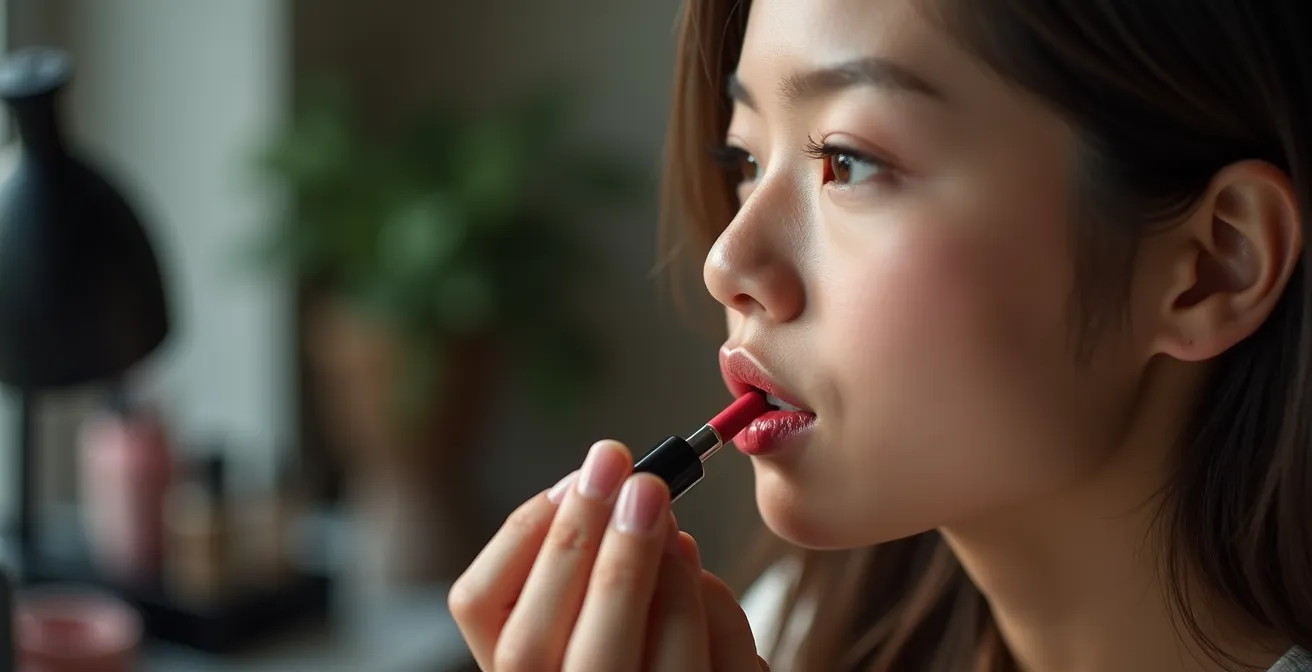
The earning potential of this model-creator hybrid is transformative. By acquiring these skills, you are no longer just compensated for your time on set but for the tangible video assets you help produce. This comparison clearly shows how adding content creation to your skillset dramatically increases your earning potential for the same job.
| Content Type | Traditional Model Rate | Model-Creator Hybrid Rate | Additional Revenue Stream |
|---|---|---|---|
| Campaign Shoot Only | $200/hour | $200/hour base | N/A |
| Shoot + Tutorial Video | $200/hour | $200/hour + $16,700/video | YouTube ad revenue |
| Shoot + Product Placement | $200/hour | $200/hour + $25,000 | Brand sponsorship |
| Full Package Deal | $200/hour | $200/hour + $50,000-60,000 | Dedicated review rights |
Pharma vs. Luxury: Which Beauty Clients Have the Biggest Budgets?
Not all beauty clients are created equal. Understanding the difference between a pharmaceutical beauty client (think dermo-cosmetics, clinical-grade skincare) and a luxury beauty client (high-end makeup and fragrance) is crucial for maximizing your income. While luxury brands may offer higher upfront fees for a single, aspirational campaign, pharmaceutical clients often provide a more stable and lucrative path through long-term contracts. The choice between them depends on your career goals: quick, high-impact paydays or steady, substantial income over several years.
Luxury clients are buying a story, an aspirational dream. The fees are high, but the work can be seasonal and trend-driven. Payment terms are typically faster, often Net 30-60. In contrast, pharmaceutical clients are buying credibility and “real results.” They need models who can represent a product’s efficacy over time, leading to multi-year contracts that cover an entire product line and its potential extensions. While the payment terms may be slower (Net 90-120), the total contract value can far exceed a one-off luxury campaign. Their casting focuses on specific, often “problematic” skin areas that their product solves, making them a prime client for models with targeted specializations.
The table below breaks down the key business differences. While luxury CPMs (Cost Per Mille, or cost per 1,000 impressions) might seem slightly higher, the long-term potential and contract stability in the pharma space often represent a better overall financial strategy for a model’s career.
| Factor | Pharmaceutical Beauty | Luxury Beauty |
|---|---|---|
| Average CPM (2024) | $11.60 | $13.90 |
| Payment Terms | Net 90-120 days | Net 30-60 days |
| Contract Type | Multi-year ‘real results’ | Single campaign high-fee |
| Casting Focus | Clinical, problem areas | Aspirational brand story |
| Long-term Potential | Product line extensions | Prestige association |
Hands, Feet, and Lips: Do You Have What It Takes to Be a Parts Model?
While the focus is often on the face, some of the most consistent and high-paying jobs in the beauty industry involve modeling specific body parts. Hands, feet, lips, and even hair can be incredibly lucrative niches for those who have the specific physical attributes and the discipline required. A hand model for a luxury watch or nail polish brand doesn’t need a traditional model’s look, but they do need perfectly uniform nail beds, smooth skin, and the ability to hold unnatural positions for hours under hot lights.
This is a field of extreme specialization. The requirements are clinical: nail bed length-to-width ratios, minimal vein visibility, and absolute cuticle uniformity. The pay reflects this scarcity and precision. While a starting rate might be modest, experienced parts models are in high demand, and their compensation can be significant. According to industry data, parts model rates can range from $20 to $1500 per hour, with top-tier talent earning at the highest end of that scale for major campaigns. A perfect pair of hands can be more valuable to a jewelry brand than a famous face.
Success in parts modeling is a business. It involves meticulous care, specialized insurance policies for your assets, and a portfolio that showcases consistency and precision. Can your hands look exactly the same under five different lighting setups? Can you hold a product for hours without a single tremor? If the answer is yes, this could be a more profitable path than traditional beauty modeling. The following checklist outlines the rigorous standards required to compete at the highest level.
Action Plan: Your Parts Modeling Qualification Audit
- Measure nail bed length-to-width ratio; document whether you meet the ideal 1.6:1 “golden ratio.”
- Take macro photographs of your cuticles from multiple angles to document their uniformity and health.
- Test and document vein visibility under different lighting conditions (soft, hard, warm, cool); the goal is minimal visibility.
- Practice and time your ability to hold unnatural or strained positions for extended periods, aiming for 2+ hours as a benchmark.
- Research and get quotes for high-value insurance policies for your specific body part, understanding the costs and coverage options.
Why Moving to the German Market Can Extend Your Career by 10 Years?
A model’s career longevity is often dictated by the market they are in. While markets like New York or Paris might be hyper-focused on youth, other international markets place a premium on experience and maturity, creating opportunities to extend a successful career by a decade or more. This concept, which we can call “geographic arbitrage,” involves strategically relocating to a market where your specific look is not just accepted, but is in high demand. The German market is a prime example of this phenomenon.
Germany’s “Best Ager” market is robust and highly valued, creating stable, well-paying work for models in their 40s, 50s, and beyond. This isn’t limited to skincare; it extends across commercial advertising for a wide range of products. As industry expert Kate Heussler notes, this market provides a significantly longer runway for careers. Her insight highlights a crucial strategic point for models planning for the long term.
As Kate Heussler states in her analysis of model compensation, “Male models have a MUCH LONGER lifespan in their model careers” in markets like Germany, a principle that increasingly applies to all models in the commercial and beauty sectors there. This isn’t an isolated case. Different markets have different aesthetic preferences. For instance, an analysis of international beauty trends shows that South Korea favors K-beauty brands while Mac Cosmetics leads in Japan. A model who may be considered “out of season” in one country could be the exact look a major brand is seeking in another. Researching and targeting these markets is a proactive business strategy.
Key Takeaways
- Your most profitable niche is where your unique physical trait solves a brand’s expensive problem (e.g., retouching costs, market access).
- Treat your modeling career as a business: your body is an asset, and its maintenance is a business expense.
- Expand your skillset to become a model-creator; stacking content fees on top of day rates is the fastest way to increase earnings.
Why a Monthly Facial Is a Tax-Deductible Business Expense for Models?
The most successful models operate not just as talent, but as a business. Adopting this mindset transforms your perspective on expenses. A monthly facial, a specialized skincare regimen, or a gym membership are not personal luxuries; they are legitimate, tax-deductible business expenses essential for maintaining your primary asset. This is the final and most crucial piece of the high-earning puzzle: optimizing your finances by treating your career with the seriousness of a corporation.
When you sign a contract with a no-retouching clause, the condition of your skin is a contractual obligation. The treatments required to maintain that condition are therefore a direct cost of doing business. By meticulously documenting these expenses and linking them to specific job requirements, you can legally deduct them from your income, significantly increasing your net earnings. For example, consistently avoiding retouching costs of $10+ per image for a client because of your skin’s quality is a quantifiable service. The cost of the treatments that enable this service is a business expense.
This requires a shift from a passive earner to a proactive CEO of your own career. It means forming an LLC to formalize your business operations, maintaining detailed records, and understanding tax law as it applies to professional artists and performers. Your accountant should be one of your closest advisors. The goal is to minimize your tax burden and maximize your take-home pay by leveraging every legal advantage available to you as a business owner.
Action Plan: Documenting Your Tax-Deductible Beauty Expenses
- Obtain itemized receipts for every treatment and product, and write a note on each one linking it to a specific job or contract requirement (e.g., “Hydrafacial for no-retouching clause in L’Oréal shoot”).
- Take ‘before’ and ‘after’ photos of your skin condition around major jobs to document the necessity of treatments for meeting contract standards.
- Use a mileage tracking app to log all travel to and from dermatologists, estheticians, and other specialized treatment centers.
- Photograph all professional-grade skincare products purchased, keeping the photos with receipts and contract references as proof of business use.
- Maintain a spreadsheet that correlates your beauty expenses with your bookings and rates, demonstrating a direct link between investment and income.
Start treating your career as the high-value business it is. The first step is to analyze which niche best suits your unique assets and build your strategy from there, ensuring every investment in your craft is also a smart financial move.